Last Updated: April 2026 | Complete Guide: History + Shopping + Food + Heritage + How to Reach
Kolkata has many faces the literary adda of College Street, the Gothic grandeur of Victoria Memorial, the aromatic chaos of New Market. But if the city has a true beating heart, it is Bara Bazar.
Here, more than 50,000 people move through narrow lanes every single day. A mosque, an Armenian church, a Portuguese cathedral, and a synagogue all stand within metres of each other. Marwari traders from Rajasthan, Gujarati merchants, Bengali families, and buyers from Bangladesh and Nepal all converge in the same dusty alleys. Bara Bazar is not a market that happens to be in Kolkata — it is the part of Kolkata that has never changed.
This is the most complete guide to Bara Bazar ever written. Whether you are a first-time visitor, a seasoned Kolkatan rediscovering your own city, or a wholesale buyer looking to source products — everything you need is here.
Why Bara Bazar is the Heart of Kolkata
Every great city has a place that existed before the city itself took shape — a place that gave the city its reason to exist. For Kolkata, that place is Bara Bazar.
Long before the British built Writers’ Buildings or laid out the Maidan, this stretch of land along the Hooghly River was already the centre of commerce in Bengal. Yarn merchants, gold traders, spice dealers, and cloth sellers had been doing business here for generations. When the East India Company arrived and chose Calcutta as their base of operations, they were in large part choosing it because of Bara Bazar — because this is where the money already was.
Today, the market covers approximately 500 bighas in the heart of old Kolkata, bounded by Posta to the north, Jorasanko to the east, BBD Bagh to the south, and the Hooghly River to the west. Mahatma Gandhi Road — one of the busiest thoroughfares in the city — runs straight through it, linking Howrah Bridge to Sealdah and carrying with it an endless stream of trucks, cycle-vans, pedestrians, and porters. The saying among traders is simple: if you cannot find it in Bara Bazar, it does not exist.
But what makes Bara Bazar the true heart of Kolkata is not just its size or its commerce. It is the extraordinary diversity of people, faiths, and cultures that have shared these lanes for over three centuries without conflict. Within a radius of less than one kilometre, you can walk through places of worship representing five distinct faiths, each built by a different community that made this corner of Kolkata their home. No other market district in India can claim anything like it.
Hindu mandirs stand between Jain dharamshalas. Marwari vegetarian thali restaurants sit next door to Mughal-style biryani houses. Bara Bazar is not just the heart of Kolkata — it is a compressed, chaotic, magnificent map of the city’s entire soul.
History of Bara Bazar: From Sutanuti Haat to India’s Largest Wholesale Market
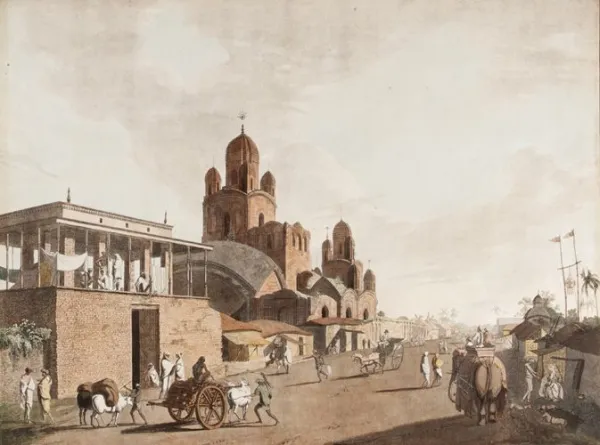
The Sutanuti Haat (Pre-1700s)
Before it was Bara Bazar, this place was called Sutanuti Haat — a yarn and cotton market owned and operated by Bengali trading families known as the Setts and the Basaks. These two clans dominated the wholesale trade of yarn and garments in the region, sourcing raw materials from the weaving centres of Dhaka, Murshidabad, and Cossimbazar and supplying them to merchants across Bengal. The Setts and Basaks were not just merchants — they were the economic backbone of pre-colonial Bengali commercial life.
Kolkata at the time was one of three villages — Sutanuti, Govindapur, and Kalikata — and Sutanuti was the northernmost, the one most defined by trade. Its location on the eastern bank of the Hooghly River was its greatest asset. River trade was everything in 17th-century Bengal, and Sutanuti sat directly on the main artery of commerce between the interior of Bengal and the Bay of Bengal.
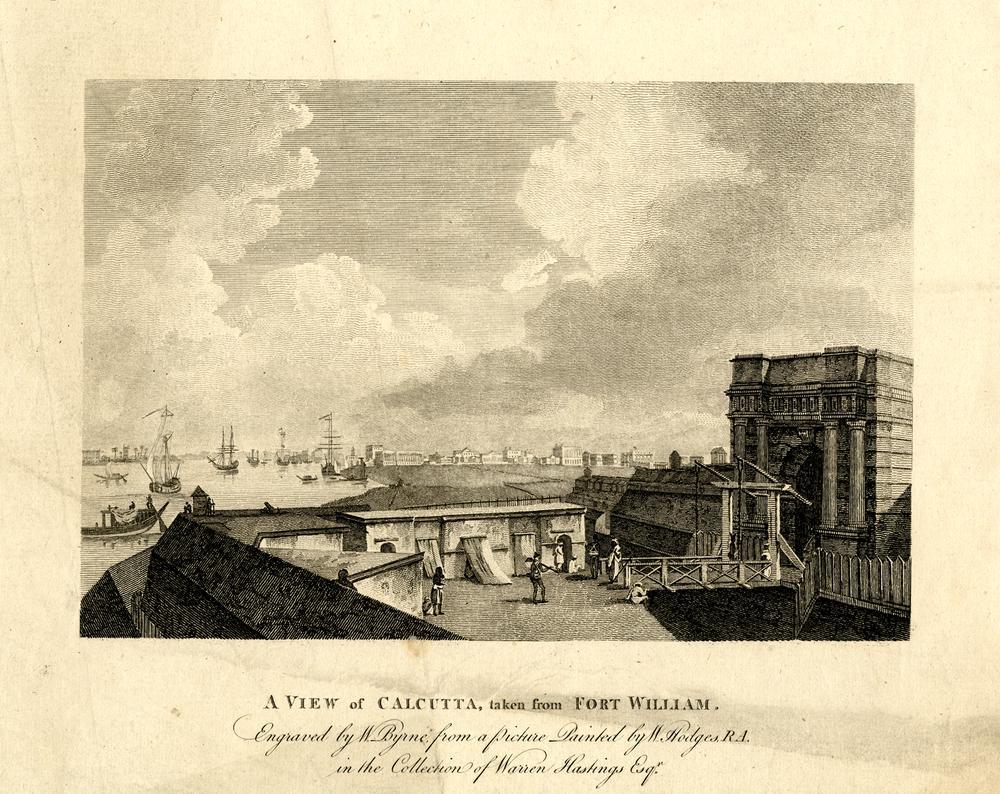
The East India Company Transforms the Market (1698–1757)
In 1698, the British East India Company purchased the rights to the three villages, and the transformation of Sutanuti Haat into a major commercial hub began in earnest. The Company needed suppliers, and the Sett and Basak families were perfectly positioned to provide them. Figures like Janardan Sett, Mukundaram Sett, and Shobharam Basak — who supplied textiles to the British East India Company — became extraordinarily wealthy, their fortunes built on being the primary interface between Indian production and British commerce.
Shobharam Bysack was so wealthy from supplying the Company that he was able to build a palatial residence whose remnants are still visible in the area today. The market was already known as “Baro Bazar” — “big market” — reflecting its scale relative to every other trading post in the region.
In 1756, the Nawab of Bengal, Siraj-ud-Daulah, sacked Calcutta and set fire to the bazaar — one of the most dramatic episodes in the market’s long history, and a reminder that Bara Bazar was always important enough to destroy. After Robert Clive’s victory at the Battle of Plassey in 1757, the market was rebuilt and expanded rapidly, fuelled by the new economic order the British had imposed on Bengal.
The Marwari Transformation (1800s–1947)
The 19th century brought a wave of Marwari trading families from Rajasthan — the Goenkas, the Birlas, the Poddars, the Bagarias — who recognised Calcutta as the commercial capital of British India and Bara Bazar as its engine room. Unlike the Setts and Basaks who had concentrated on textiles and yarn, the Marwaris diversified aggressively. They moved into commodities trading, money lending, insurance, and eventually manufacturing. By the late 1800s, the area had expanded from its textile roots into a sprawling wholesale market covering virtually every category of merchandise imaginable.
The Marwaris also brought their religious and cultural traditions with them. The dharamshalas, temples, and vegetarian food culture that still define certain lanes of Bara Bazar today are direct legacies of this migration. Street names like Hariram Goenka Street, Jamunalal Bajaj Street, and Manohar Das Katra preserve the names of Marwari merchant families who shaped the neighbourhood across generations.
Harrison Road — now renamed Mahatma Gandhi Road — was laid out as the main artery through the market, connecting Howrah Bridge on the west to Sealdah on the east. This 75-foot-wide road became the lifeline of Kolkata’s commerce and remains so today.
Post-Independence: The Market That Never Stopped (1947–Present)
While much of Kolkata’s economy struggled in the decades after Independence — particularly after the Partition of Bengal in 1947, which severed trade routes with East Pakistan — Bara Bazar adapted. The jute trade contracted but textiles expanded. Electronics arrived. Plastics, hardware, cosmetics, and stationery carved out their own lanes. The market simply absorbed each new wave of commerce without losing its essential character.
Today, Bara Bazar is classified as one of the largest wholesale markets in Asia. Traders from Bangladesh, Nepal, and Myanmar maintain regular buying operations here. It is also known as the Chandni Chowk of Kolkata. It handles an estimated daily turnover in the hundreds of crores of rupees. And yet, walking through its lanes on any weekday morning, it still feels exactly as it must have felt two hundred years ago — chaotic, alive, and utterly irreplaceable.
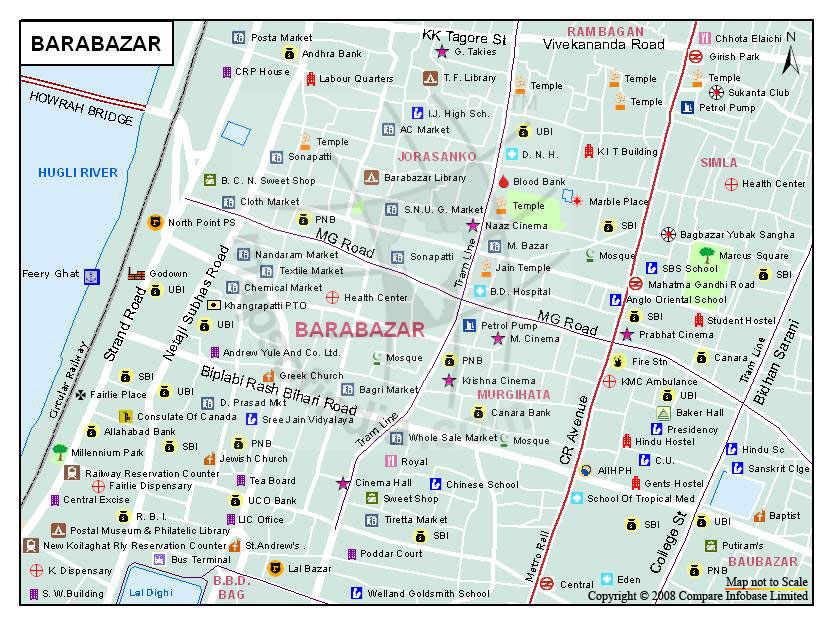
Layout & Overview: Understanding the Market
First-time visitors are often overwhelmed by Bara Bazar because it is not a single market — it is a city-within-a-city. Understanding its basic geography before you arrive will save you hours of confusion.
The market is divided into clusters of lanes called katras — each katra traditionally specialising in a specific type of merchandise. The main spine of the market is Mahatma Gandhi Road, running east–west. North of MG Road lies Posta, the wholesale hub for edible goods — oil, salt, sugar, cereals, and spices. South of MG Road is the core textile and wholesale district where most shopping visitors spend their time.
The key sub-areas to know are:
- Chinipatti — wholesale sugar and confectionery
- Tulapatti — jute and fibre goods
- Dhotipatti — traditional cotton garments, especially dhotis
- Fancypatti — fancy and synthetic fabrics, fashion accessories
- Posta — commodities, edible goods, dry groceries
The market runs roughly Monday to Saturday, with Sunday being the slowest day. Most wholesale operations are at peak activity between 9AM and 1PM. Retail buyers can visit any time during opening hours (roughly 10AM to 7PM for most shops), but arriving before noon gives you the best experience — the noise, the energy, and the sheer number of people moving through the lanes is at its most spectacular.
Street-by-Street Shopping Guide: What to Buy Where
This is the most detailed street-level shopping breakdown of Bara Bazar available anywhere. Use it as your map before you visit.
| Street / Market | What to Buy | Best For | Price Range |
|---|---|---|---|
| Cotton Street | Sarees, fabrics, cotton cloth, wholesale textiles | Retailers, boutique owners, home sewers | ₹100–₹2,000+ per piece |
| Jamunalal Bajaj Street | Sarees, lehengas, salwar suits, kurtas | Wholesale garment buyers | ₹200–₹3,000 per piece |
| Hariram Goenka Street | Sarees (especially silk and Banarasi), lehengas | Bridal shopping, wholesale buyers | ₹500–₹10,000+ |
| Manohar Das Katra | Full garment range — sarees, dhotis, sherwanis, jeans, t-shirts, kurtis | Bulk garment sourcing, small retailers | ₹150–₹2,500 |
| Netaji Subhas Road (NS Road) | Hardware, tools, machine parts, industrial supplies | Contractors, small manufacturers | Varies widely |
| Bagri Market (Canning Street) | Household items, gift items, cosmetics, décor, toys | Gift shop owners, households, Diwali shopping | ₹50–₹2,000 |
| Vikram Chand Market / Khangrapatti | Electronics, artificial jewellery, accessories | Electronics retailers, jewellery resellers | ₹100–₹5,000 |
| Canning / Ezra / Old China Bazar Street | Cosmetics wholesale — perfume, skincare, makeup | Beauty shop owners, salon suppliers | ₹100–₹3,000 |
| Kalakar Street | Kitchenware, readymade clothing, stationery, terracotta crafts, painted pots, souvenirs | Home décor buyers, tourists, craft lovers | ₹50–₹1,500 |
| Banstalla Street | Mixed wholesale — plastics, packaging, sundries | Traders, small businesses | Varies |
| Satyanarayan AC Market | Shoes, jewellery, ethnic clothing — indoor, air-conditioned | First-time visitors, retail shoppers | ₹300–₹5,000 |
| Bagri Market (handbags section) | Women’s handbags, leather ballerinas, shoes | Footwear and bag retailers | ₹300–₹3,000 |
| Strand Road warehouses | Not for shopping — colonial-era architecture, river views | Heritage walkers, photographers | Free to explore |
Key Shopping Tips for Bara Bazar
- Bargain always. Prices quoted to unfamiliar faces are never final prices. A polite but firm counter-offer of 20–30% below the asking price is completely normal and expected.
- Bring cash. While many larger shops now accept UPI, the smaller traders and katra shops are almost exclusively cash-only. Carry small denominations.
- Know minimum order quantities. Most traders here are wholesalers — they may have minimum quantities of 6, 12, or 50 pieces per item. If you want a single piece, say so upfront so they can direct you appropriately.
- Wear comfortable shoes. The lanes are uneven, often wet, and always crowded. This is not the place for heels or formal footwear.
- Go early. The best energy, freshest stock, and most cooperative traders are found between 10AM and noon.
- Start at Satyanarayan AC Market if you are a first-timer. The indoor, air-conditioned space is far less disorienting than the open lanes, and gives you a sense of what is available before you plunge into the main market.
The Walk of Faiths: Heritage Landmarks Inside & Around Bara Bazar
This is the section of Bara Bazar that almost no guide ever covers properly — and it is, arguably, the most remarkable thing about the area. Within a radius of less than one kilometre, you can walk through places of worship representing five distinct faiths, each built by a different community that made this corner of Kolkata their home. No other market district in India can claim anything like it.
Allow at least two hours for this walk. Bring a camera.
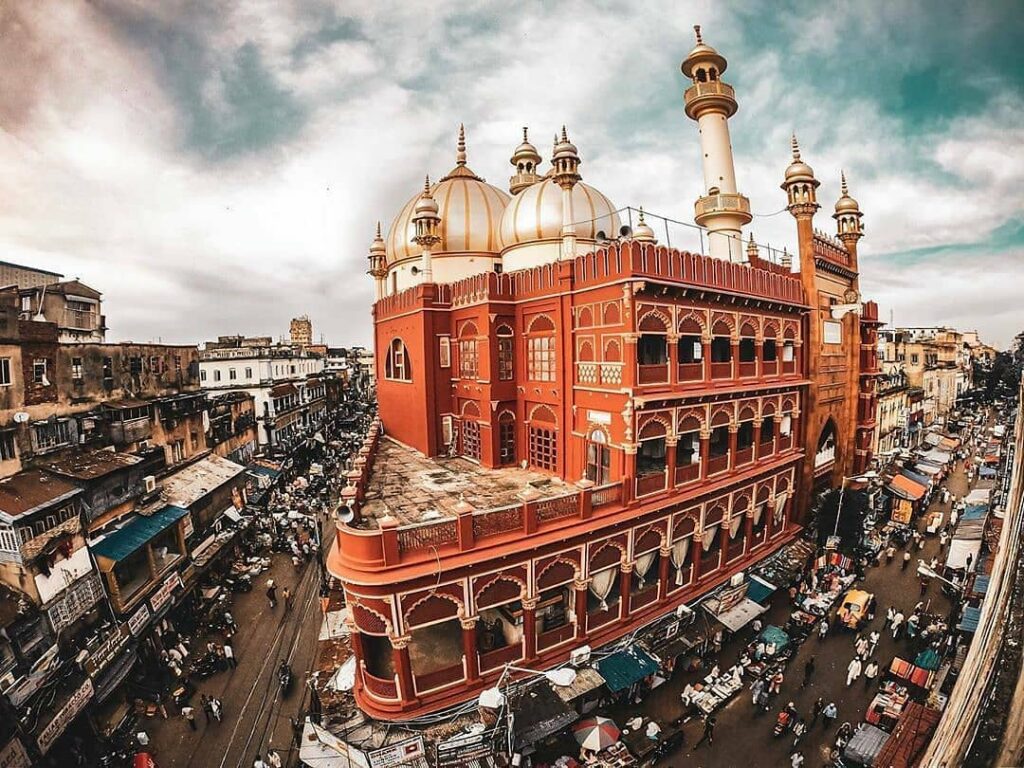
1. Nakhoda Masjid (1926) — The Grand Mosque of Kolkata
Location: Zakariya Street, near Rabindra Sarani crossing
The largest mosque in Kolkata and the principal mosque of the entire city, Nakhoda Masjid was built in 1926 by Abdur Rahim Osman, a wealthy merchant from Kutch, Gujarat. The name “Nakhoda” means “captain of a ship” — a tribute to the seafaring Kutchi Memon community that commissioned it. The mosque can accommodate 10,000 worshippers at a time.
The architecture is extraordinary — a massive red-sandstone structure modelled on the Mausoleum of Mughal Emperor Akbar at Sikandra, with green-domed roofs, minarets, and an elaborate facade built in Indo-Saracenic style. It is one of the few buildings in Kolkata that genuinely stops you in your tracks. Around the mosque, the lanes of Zakariya Street form Kolkata’s most famous Muslim food district, particularly during Ramzan when the area transforms into a night bazaar of biryani, haleem, and kebabs.
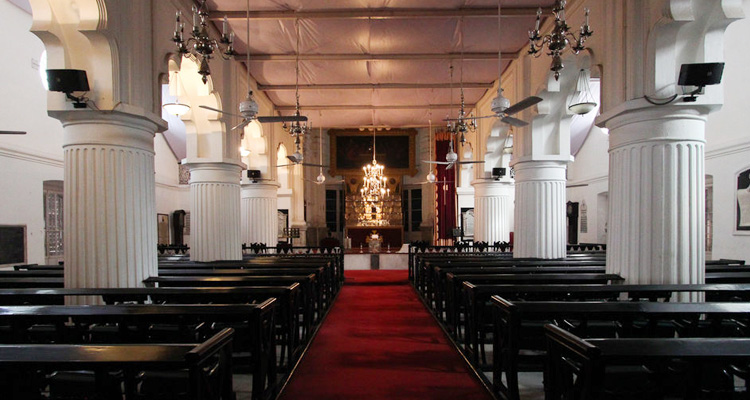
2. Armenian Church of the Holy Nazareth (1724) — One of the Oldest in India
Location: 2 Armenian Street
Built in 1724 on a former Armenian cemetery, the Church of the Holy Nazareth is one of the oldest churches in India and a testament to the forgotten Armenian merchant community that played an enormous role in early Calcutta’s commerce. The church was designed by Iranian-Armenian architect Levon.
Inside, three remarkable oil paintings dominate the walls — one depicting the Last Supper, considered one of the finest examples of early colonial religious art in Kolkata. The mural tablets in the overhead gallery record the names of Armenian merchants who lived and traded in Calcutta centuries ago. The church is still maintained and holds regular services. It is almost always quiet when you visit — a profound contrast to the roaring lanes just outside its gate.
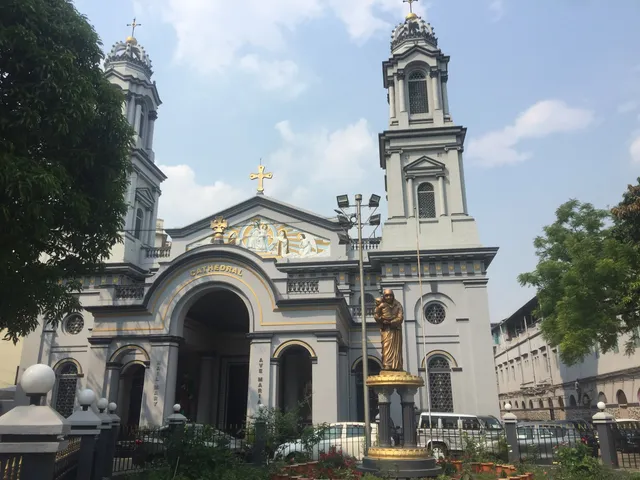
3. Holy Rosary Cathedral (1799) — Kolkata’s Portuguese Legacy
Location: Brabourne Road, near Strand Road
Built in 1799, the Holy Rosary Cathedral is the only remaining major building from Kolkata’s little-known Portuguese colonial history. The Portuguese were among the earliest Europeans to trade along the Hooghly River, establishing settlements at Bandel and Chinsurah. The cathedral — also called the Portuguese Church — is a serene Neo-Classical structure that feels entirely out of time in the context of the frantic market district surrounding it. It is well-maintained, open to visitors, and offers an extraordinary moment of quiet in the middle of one of the world’s busiest markets.
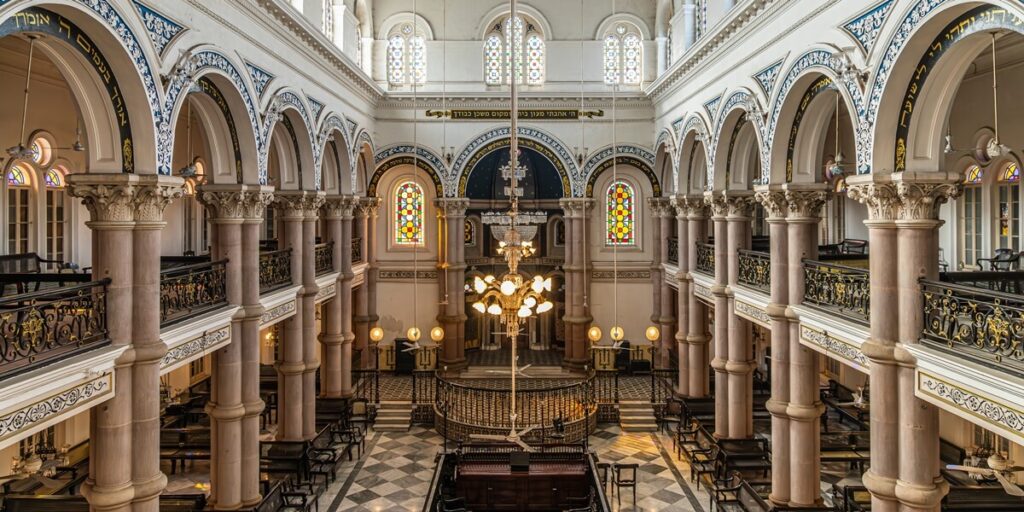
4. Maghen David Synagogue (1884) — The Largest Synagogue in Eastern India
Location: Canning Street
Built in 1884 by Elias David Ezra in memory of his father David Joseph Ezra — who made his fortune in Calcutta’s real estate trade — the Maghen David Synagogue is the largest synagogue in Eastern India and one of the most architecturally significant Jewish buildings in Asia. The Victorian-style building is painted a distinctive sky blue and features ornate ironwork, stained glass, and a soaring interior that speaks to the extraordinary wealth of Calcutta’s Baghdadi Jewish community at its peak.
The Jewish community of Calcutta has largely emigrated over the past century, and the synagogue is now maintained by a small caretaker community. It is open to visitors, though you should call ahead to confirm visiting hours. Standing inside this nearly empty 140-year-old synagogue, in the middle of India’s largest wholesale market, is one of the most quietly extraordinary experiences Kolkata has to offer.
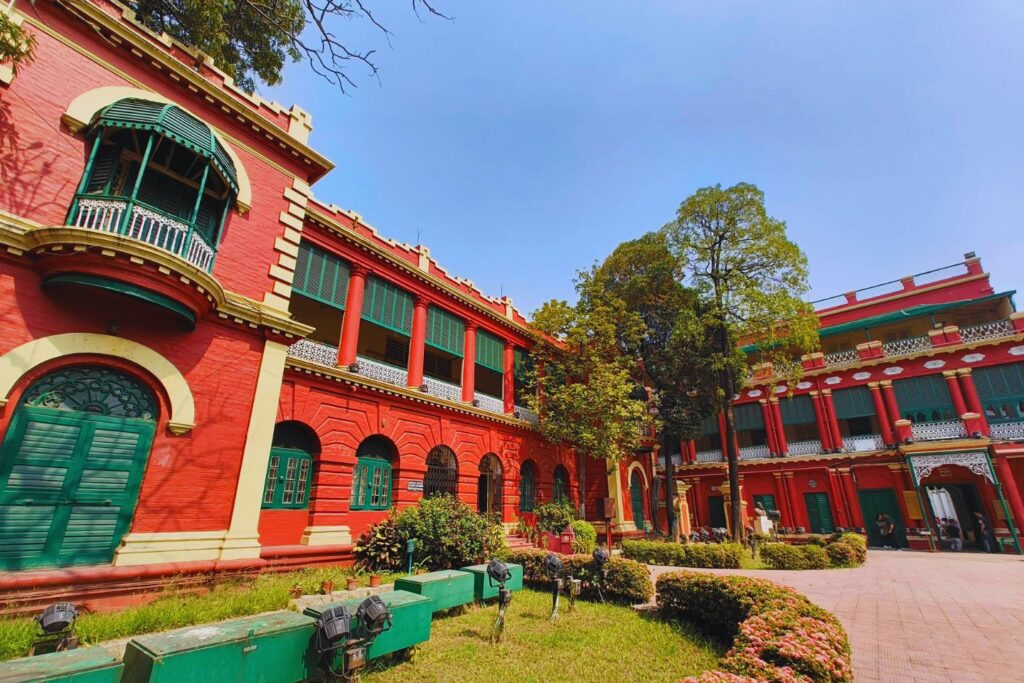
5. Jorasanko Thakur Bari — Tagore’s Family Home (1784)
Location: 6/4 Dwarakanath Tagore Lane, Jorasanko
A short walk from the main Bara Bazar lanes, the Jorasanko Thakur Bari is the ancestral home of the Tagore family — the most celebrated family in Bengali cultural history. Rabindranath Tagore was born here in 1861, and the house remained the centre of the Bengal Renaissance throughout the 19th century. Today it functions as the Rabindra Bharati University and Museum, with exhibits covering Tagore’s life, work, and the broader cultural movement he led. The building’s interior — its courtyards, painted ceilings, and echoing corridors — is one of the great heritage experiences of Kolkata, and it is only a 10-minute walk from the heart of Bara Bazar.
Suggested Walking Route
Start at MG Road Metro Station → walk north to Armenian Church of the Holy Nazareth (15 min) → south along Armenian Street to Maghen David Synagogue on Canning Street (8 min) → west along Brabourne Road to Holy Rosary Cathedral (10 min) → north along Strand Road (pausing for colonial warehouse architecture and Hooghly River views) → east to Nakhoda Masjid on Zakariya Street (15 min) → lunch at Royal Indian Hotel nearby → optional extension to Jorasanko Thakur Bari (15-minute walk or short auto ride).
Total walking time: approximately 2.5 to 3 hours at a relaxed pace.
Where to Eat Near Bara Bazar: Street Food, Thalis & Biryani
The food around Bara Bazar reflects its extraordinary cultural diversity. Within a few lanes, you can eat a pure vegetarian Marwari thali for ₹120, a slow-cooked Mughal-style biryani that has not changed its recipe in 70 years, Chinese dim sum made by third-generation Hakka families, and street food that exists nowhere else in Kolkata. This is one of the most underrated food districts in India.
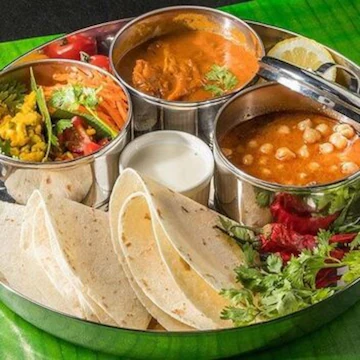
The Marwari Vegetarian Thali Restaurants
The Marwari and Gujarati merchant community that dominates Bara Bazar’s wholesale trade has created a vegetarian food culture in the lanes around Posta and the main market that is simply not found elsewhere in Kolkata. Look for small, unmarked restaurants — often on the first floor of a commercial building with no signage — that serve unlimited pure vegetarian thalis.
A typical thali includes sabji, dal, rice, chutney, farsan, salad, and chapati or poori. Prices range from ₹80 to ₹150 per person. These places operate on a lunchtime-only basis (roughly 11AM to 2PM) and the food is some of the most honest, home-style vegetarian cooking you will eat in the city.
Practical tip: If you cannot find these restaurants (they rarely have signs), simply ask any nearby shopkeeper — “thali kahaan milega?” Every trader in the area knows exactly where to point you.
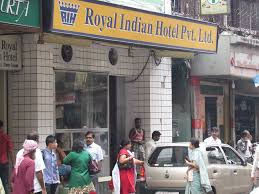
Royal Indian Hotel — The Grandfather of Kolkata Biryani
Location: Tarachand Dutta St, Kolutolla,
Royal Indian Hotel is not a hotel — it is a biryani institution. Revered by Kolkata food lovers as one of the originators of the city’s distinctive Awadhi-influenced biryani (with its trademark potato in the rice), Royal has been serving slow-cooked mutton from an open karigar station by the main road for decades. The aroma of the slow-cooking mutton is, genuinely, one of the great street smells of Kolkata. The downstairs section is casual and communal; the first floor has cabins suited for families; and there is an air-conditioned dining hall across the street. Go for the mutton biryani and the mutton rezala.
Zakaria Street Food Walk — The Best Meal in North Kolkata
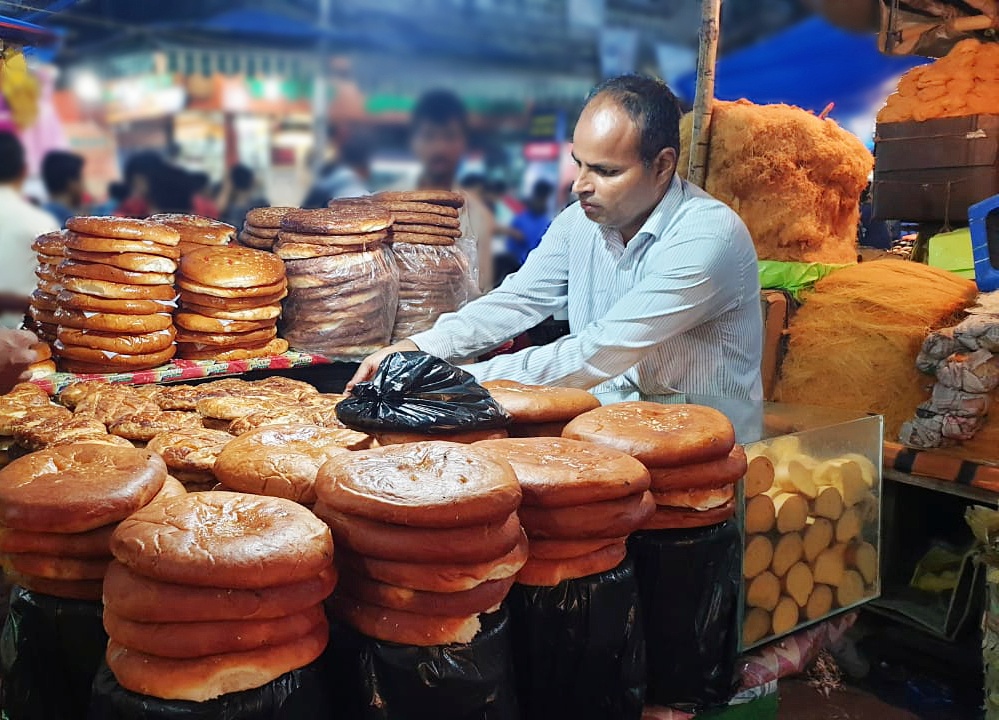
Zakaria Street, running along the side of Nakhoda Masjid, is to Kolkata what Chandni Chowk’s Paranthe Wali Gali is to Delhi — a legendary, ancient food lane that rewards curiosity and a strong appetite. The street is lined year-round with small eateries serving Mughal and Awadhi food, but it transforms completely during Ramzan, when makeshift stalls appear from 2PM onwards selling food until 3:30AM.
Year-round must-eats on Zakaria Street:
- Haleem at Sufia — on your right entering from Rabindra Sarani. Beef, mutton, and chicken versions available. Starts selling at 2PM; typically sold out by 5:30PM. For exotic versions with kofta, magaz (brain), or zuban (tongue), visit Aminia, directly opposite the Nakhoda Masjid main gate.
- Biryani at Islamia and Bashir — both on the lane of Colootola Masjid, next to Zakaria Street from MG Road. Strong competition for the best biryani in the district.
- Seekh kebab rolls — available from numerous stalls along the main stretch. The seekh kebab rolls here are stuffed more generously and spiced more carefully than anywhere else in the city.
During Ramzan, the stalls also sell kurtas, ittar (traditional perfume), lachchha sewai (a vermicelli sweet dish), and seasonal sweets. A Ramzan evening walk through Zakaria Street is one of Kolkata’s great atmospheric experiences regardless of your faith or background.
Tirretti Bazaar — The Chinese Breakfast You Did Not Know Existed
Location: Tirretti Bazaar, approximately 10 minutes’ walk from MG Road Metro
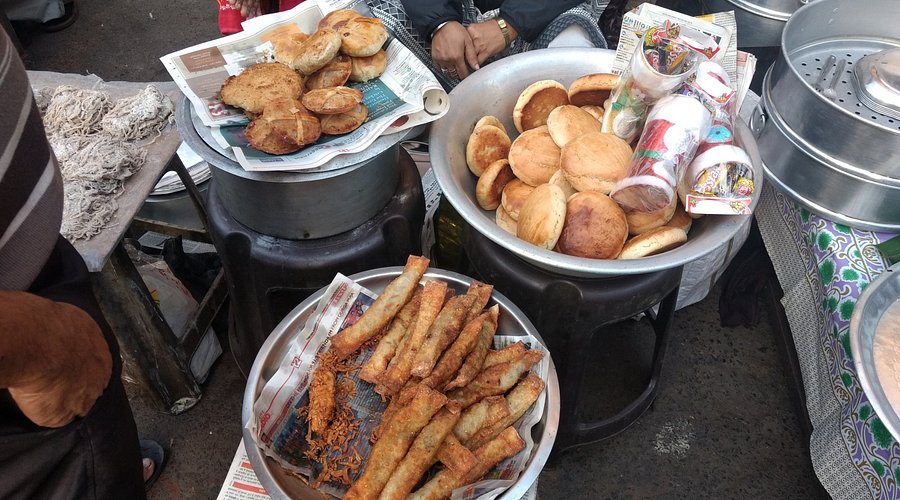
A short walk from the main Bara Bazar area, Tirretti Bazaar is the remnant of Kolkata’s once-thriving Hakka Chinese community — one of the oldest Chinese settlements in South Asia. On Sunday mornings from roughly 7AM to 10AM, a small number of elderly vendors set up stalls selling handmade dim sum, pork dumplings, and Chinese pastries that have been made the same way for three generations. This is a disappearing Kolkata tradition. Go early; it is entirely sold out by 9AM on most Sundays.
Street Food Inside the Market Itself
As you walk through Bara Bazar’s lanes during the day, do not miss:
- Moong dal chilla stalls — thin savoury crepes made from moong dal, served with chutney. A Bara Bazar speciality that is difficult to find elsewhere in the city.
- Rajasthani snacks — kachori, mirchi bajji, and farsan available from small carts near the Marwari market areas. The kachoris are freshly fried and generously spiced.
- Chai from the corner stalls — the tea at the small stalls inside the market lanes is made in the North Indian style (boiled with milk and spices). Excellent fuel for a long morning of shopping.
- Samosas and laddu from the food stalls near Satyanarayan AC Market — quick, filling, and available throughout the day.
Bara Bazar During Festivals: Diwali, Durga Puja & Eid
Bara Bazar is extraordinary every day of the year — but during the major festivals, it becomes something else entirely. The market transforms season by season, and each festival brings a different character to the lanes.
Diwali (October / November)
This is the single best time to visit Bara Bazar if you have never been before. The market is the undisputed centre of Kolkata’s Diwali shopping. Every shop is decorated, makeshift stalls appear on every pavement selling diyas, Lakshmi-Ganesh idols, Chinese lanterns, and pooja essentials, and the narrow lanes are even more impossibly crowded than usual.
The Satyanarayan AC Market lane and adjacent lanes fill with shops selling kapoor goli, roli-chawal, moli, batasha, janeu, and every other item needed for the Diwali puja. For dry fruits, Beharilal Omprakash on this strip is famous for premium-quality pista, badam, akhrot, and kaju that make excellent gifts. For sweets, Tewari Brothers in Burrabazar is considered the gold standard.
Durga Puja (September / October)
In the weeks leading up to Durga Puja, Bara Bazar is the source for much of the fabric, decoration, and material that goes into building the thousands of pujas across Kolkata and Bengal. Fabric merchants see their highest volumes of the year. The Kalakar Street area is particularly worth visiting during this season — the terracotta crafts, decorative items, and artistic supplies sold here are made and sourced specifically for the puja season.
Haal Khaata / Akshay Tritiya (April / May)
One of the most distinctively Bara Bazar events in the calendar is Haal Khaata — the traditional Bengali new accounting year, observed on Akshay Tritiya. This is when traders open new account books and perform Lakshmi-Ganesh puja at their shops. The Satyanarayan Market becomes vibrant with idol worship and the distribution of sweets among the trading community. For visitors, it is a rare window into the living commercial culture of Bara Bazar — a tradition observed in these lanes continuously since the 18th century.
Ramzan / Eid (Dates Vary)
The area around Nakhoda Masjid and Zakaria Street during Ramzan is one of the most remarkable sensory experiences in all of Kolkata. The food is exceptional, the atmosphere is generous and welcoming, and the lanes between the Masjid and the market fill with stalls selling everything from ittar to embroidered kurtas. If you can plan a single evening visit to Bara Bazar, make it a Ramzan iftar evening — arrive around 5PM as the stalls are setting up and stay through the post-iftar rush.
Poila Boisakh — Bengali New Year (Mid-April)
Bengali New Year sees Ganesh and Lakshmi idols worshipped in the Satyanarayan Market, with sweets distributed among traders and their communities. The market takes on a festive mood that is warmly Bengali despite the predominantly Marwari and Gujarati business ownership — a reminder that this market, for all its cultural diversity, has been absorbed completely into the rhythm of Kolkata life.
Wholesale Buying Guide for Small Business Owners
A significant number of people who visit Bara Bazar are small business owners, boutique operators, or aspiring entrepreneurs looking to source products at wholesale prices. This section is specifically for you.
What You Can Source at Wholesale from Bara Bazar
- Textiles and garments — all categories: sarees (cotton, silk, synthetic, Banarasi), salwar suits, lehengas, kurtis, men’s formal wear, casual wear, children’s clothing. The Manohar Das Katra is the central wholesale garment hub. Minimum quantities typically range from 6 to 24 pieces per design.
- Fabrics by the metre — pure silk, Banarasi silk, cotton, chiffon, khadi, linen, rayon available from Cotton Street and surrounding lanes. Sold by lot or by the metre at wholesale rates.
- Electronics and accessories — mobile phone accessories, small electronics, artificial jewellery, and fashion accessories from Vikram Chand Market and Khangrapatti. Minimum orders apply.
- Cosmetics and beauty — wholesale cosmetics, perfumes, skincare, and salon supplies from Canning Street, Ezra Street, and Old China Bazar Street.
- Hardware and industrial — tools, machine parts, plumbing supplies, and electrical goods from NS Road near Manohar Das Katra.
- Household goods and gifts — kitchenware, décor, toys, stationery, and seasonal items from Bagri Market on Canning Street.
How to Navigate as a Wholesale Buyer
- Come with a specific list. The market is so large that entering without a plan will cost you hours. Know what category you are sourcing before you arrive.
- Use the katras as anchors. Each katra specialises in a specific product type. Find the relevant katra for your category and work outward from there.
- Build relationships over multiple visits. The best prices and best stock are reserved for known buyers. Your first visit is reconnaissance; your second and third visits are when the real business happens.
- Bring a local contact if possible. If you know anyone who regularly buys from Bara Bazar, ask them to come with you on the first visit. Prices quoted to unfamiliar faces are significantly higher than those quoted to known buyers.
- Best visiting days: Tuesday through Thursday. Monday is chaotic post-weekend; Friday afternoons slow down near the Nakhoda Masjid area for Juma prayers; Saturday is crowded with retail buyers. Tuesday to Thursday mid-morning is the sweet spot for focused wholesale purchasing.
How to Reach Bara Bazar Kolkata
By Metro (Recommended)
The Kolkata Metro is by far the easiest and fastest way to reach Bara Bazar, especially if you are coming from south or central Kolkata.
- MG Road Station (Blue Line / Line 1) — the most convenient stop, placing you directly on Mahatma Gandhi Road in the heart of the market. Use Exit 2 for the main Bara Bazar lanes.
- Central Station (Blue Line / Line 1) — slightly south of the main market; useful if you are heading to the Nakhoda Masjid and Zakaria Street end of the area.
- Howrah Station (interchange station) — if arriving by train from outside Kolkata, Howrah Station is directly connected to the Bara Bazar area by Howrah Bridge (15-minute walk) or auto-rickshaw (5 minutes).
By Bus
Dozens of Kolkata bus routes pass through or near Bara Bazar along MG Road or Rabindra Sarani. Ask for “Bara Bazar” or “MG Road” at any bus stop in central Kolkata and conductors will direct you. Kolkata tram route 18 also serves Burrabazar via MG Road for a classic city experience.
By Auto-Rickshaw or Taxi
From Park Street, Esplanade, or BBD Bagh: approximately 15–25 minutes by auto-rickshaw or Ola/Uber depending on traffic. Tell the driver “Bara Bazar MG Road” or “Satyanarayan AC Market.” Traffic around the market — particularly near the Howrah Bridge approach road — can be extremely heavy during peak hours (9–11AM and 5–7PM). Factor in at least 15 extra minutes during these windows.
By Commuter Train
Burrabazar Railway Station, on the Circular Railway line, sits directly in the market area. If you are coming from Dum Dum, Bidhannagar, or the eastern suburbs, the Circular Railway is a fast and often overlooked option.
Parking
There is almost no practical parking inside or immediately adjacent to Bara Bazar. If you must come by car, park near Howrah Bridge or BBD Bagh and walk or take an auto. Driving into the market lanes is strongly discouraged — the streets are rarely wide enough for two vehicles to pass, and getting stuck in a car inside the market is a genuinely unpleasant experience.
Practical Tips, Timings & What to Know Before You Go
Market Timings
| Day | General Opening Hours | Notes |
|---|---|---|
| Monday | 10AM – 7PM | Post-weekend busy; good for retail, slower for wholesale |
| Tuesday – Thursday | 9AM – 7PM | Best days for wholesale buying; full activity by 9:30AM |
| Friday | 9AM – 6PM | Slower after 1PM near Nakhoda Masjid area during Juma prayers |
| Saturday | 9AM – 7PM | Busiest day for retail; most crowded overall |
| Sunday | 10AM – 4PM (reduced) | Many wholesale shops closed; some retail open; good for Tirretti Bazaar Chinese breakfast nearby |
Best Time of Day to Visit
- 9AM – 12PM: Best for wholesale buyers; market at full energy; traders most attentive before the midday rush
- 12PM – 3PM: Busiest period; crowded but highly energetic; best for experiencing the full atmosphere
- 3PM – 5PM: Quieter; good for exploring heritage sites and street food; some wholesale shops begin closing
- After 5PM: Retail shops remain open but wholesale activity winds down significantly
What to Wear and Bring
- Wear: Comfortable, breathable clothes. Light cotton is ideal. Avoid white — the lanes are dusty and often damp underfoot.
- Shoes: Flat, closed-toe shoes with good grip. No heels. No sandals unless they have proper ankle support.
- Bag: A cross-body bag or backpack worn in front. The crowds are dense enough to make this a sensible precaution.
- Cash: Carry ₹2,000–₹5,000 in mixed denominations. Many small traders do not accept cards or UPI.
- Water: Bring your own. Clean drinking water is hard to find inside the market lanes.
- Power bank: Useful — you will use Maps, camera, and UPI heavily throughout the day.
Safety and General Awareness
Bara Bazar is busy but not dangerous. The dense crowds are the main challenge rather than any personal safety concern. Keep your belongings secure in front-facing bags, stay aware of the constant movement of hand-carts and delivery vehicles in the narrow lanes — they have right-of-way by default and move fast. If you feel disoriented, any shopkeeper in the area will happily give you directions to MG Road or the nearest Metro station.
Frequently Asked Questions
What is Bara Bazar Kolkata famous for?
Bara Bazar is famous as one of India’s and Asia’s largest wholesale markets, operating continuously since the 18th century. It is particularly renowned for wholesale textiles, sarees, garments, and household goods. Beyond shopping, it is famous for its extraordinary cultural diversity — a mosque, an Armenian church, a Portuguese cathedral, and a synagogue all stand within the same neighbourhood. It is also celebrated for its street food, particularly the Marwari vegetarian thalis and the Mughal biryani culture around Zakaria Street.
What is the best time to visit Bara Bazar Kolkata?
The best time of day is between 9AM and noon, when the market is at full energy and traders are most engaged. The best days of the week are Tuesday through Thursday for wholesale buying, and Saturday for the best retail atmosphere. For a festival visit, Diwali season (October–November) offers the most spectacular experience, with the lanes transformed by decoration stalls and the highest footfall of the year.
Is Bara Bazar only for wholesale buying?
No — while Bara Bazar is primarily a wholesale market, retail buyers are welcome throughout. The Satyanarayan AC Market is specifically retail-oriented and a good starting point for non-wholesale visitors. Many shops on Kalakar Street and around Bagri Market sell individual pieces at reasonable prices. Even if you are not buying, Bara Bazar is worth visiting purely for the experience — the history, the food, the heritage landmarks, and the atmosphere are unlike anything else in Kolkata.
How do I reach Bara Bazar by Metro?
Take the Blue Line (Line 1) to MG Road Station. Use Exit 2 and you will be in the heart of the market. Central Station is also nearby, about a 10-minute walk from the Zakaria Street end of the area.
What are the must-buy items from Bara Bazar?
Sarees and dress materials from Cotton Street and Manohar Das Katra, women’s handbags and shoes from Bagri Market, kitchenware and home décor from Kalakar Street, terracotta crafts and painted pottery from Kalakar Street, cosmetics at wholesale prices from Canning Street, and seasonal items during Diwali (diyas, lights, and pooja essentials from the Satyanarayan AC Market lane).
What heritage sites are near Bara Bazar?
The Armenian Church of the Holy Nazareth (1724), Nakhoda Masjid (1926), Holy Rosary Cathedral (1799), the Maghen David Synagogue (1884), the historic colonial warehouses along Strand Road, and Jorasanko Thakur Bari — Rabindranath Tagore’s ancestral home — are all within walking distance of the main market. The combination of these sites makes Bara Bazar one of the richest heritage walks in all of India.
Is Bara Bazar open on Sundays?
Partly. Many wholesale operations are closed on Sundays, but a significant number of retail shops remain open, typically from 10AM to 4PM. Sunday mornings are also the best time to visit nearby Tirretti Bazaar for the legendary Hakka Chinese breakfast served by the area’s remaining Chinese community — but arrive by 8AM as stalls sell out quickly.
What food should I eat near Bara Bazar?
The must-eat experiences are: the unlimited vegetarian Marwari thali (available lunchtime only, ₹80–₹150, ask locals to direct you); mutton biryani at Royal Indian Hotel near Nakhoda Masjid; haleem at Sufia or Aminia on Zakaria Street; moong dal chilla from market stalls inside the lanes; and, if visiting on a Sunday morning, the Hakka Chinese breakfast at Tirretti Bazaar.
How is Bara Bazar different from New Market or Gariahat?
New Market and Gariahat are primarily retail markets — you go there to buy individual items at retail prices. Bara Bazar is fundamentally a wholesale market where prices are lower but minimum quantities apply for most merchandise. The atmosphere is also completely different: New Market is organised and relatively navigable; Bara Bazar is vast, chaotic, and requires navigating a network of specialised lanes. Bara Bazar is also a historical and cultural destination in a way that the other markets are not — the heritage landmarks, the multi-faith character, and the 300-year history make it a place of genuine significance beyond commerce.
What is the nearest Metro station to Bara Bazar?
MG Road Station on the Blue Line (Line 1) is the most convenient station, placing you directly on Mahatma Gandhi Road at the heart of the market. Central Station is also close and is better if you are visiting the Nakhoda Masjid and Zakaria Street end of the area.
Last updated: April 2026. Timings and prices are subject to change. The heritage sites described in this guide are open to visitors but may have limited hours — it is advisable to call ahead before visiting the synagogue and Armenian church in particular. All shopping price ranges are approximate and based on conditions as of early 2026.