Last Updated: April 2026 | Covers: History + Adda Culture + Heritage Cafés + Specialty Coffee + Neighbourhood Guide + Work-From-Café Tips
Ask someone what Kolkata is known for and they will say Durga Puja, mishti doi, Rabindranath Tagore, and adda. They will probably mention chai. What they are less likely to mention — but absolutely should — is coffee.
Kolkata’s relationship with coffee is unlike any other city in India. It is not about the trendy third wave scene that defines Bengaluru. It is not about the quick espresso culture of Mumbai. Kolkata’s coffee culture is about something older and harder to define: the idea that a single cup of coffee, shared across a marble-top table in a high-ceilinged room full of strangers arguing about literature and politics, is one of the highest forms of human activity. That idea has a name. It is called adda. And it was born here.
This guide tells the full story from the Albert Hall of 1876 to the pour-over bars and immersive roasteries of 2026, from a ₹20 cup at College Street to a ₹250 single-origin brew at Yours Truly or Blue Tokai. Whether you are a Kolkata local, a first-time visitor, a coffee obsessive, or someone who just wants to know where to find a genuinely good cup this is the only guide you need.
What is Adda? The Concept That Built Kolkata’s Coffee Culture
Before we talk about where to drink coffee in Kolkata, we need to talk about why coffee matters here in a way it does not anywhere else.
Adda pronounced “aad-da” is a Bengali word with no precise English equivalent. It describes a particular kind of social gathering: an unstructured, unhurried, deeply engaged conversation between friends or acquaintances, typically over something to eat or drink, that can last anywhere from one hour to an entire afternoon. The topics are boundless politics, cinema, cricket, philosophy, gossip, poetry, city affairs and there is no agenda and no conclusion required. The goal is simply the conversation itself.
Adda is considered a distinctly Bengali art form, something that other cities approximate but never quite achieve. And the single most important material condition for adda is a place where you can sit for a very long time without being asked to leave. A place where ordering one cup of coffee gives you permission to stay indefinitely. A place where the ambient noise of other people’s conversations forms a kind of social music around your own.
That place, for over a century, has been the Indian Coffee House on College Street. And it is from this specific combination coffee plus the permission to linger that Kolkata’s entire coffee culture grew.
A Brief History of Coffee in Kolkata: 1876 to Today
Albert Hall and the Birth of the Coffee House (1876–1942)
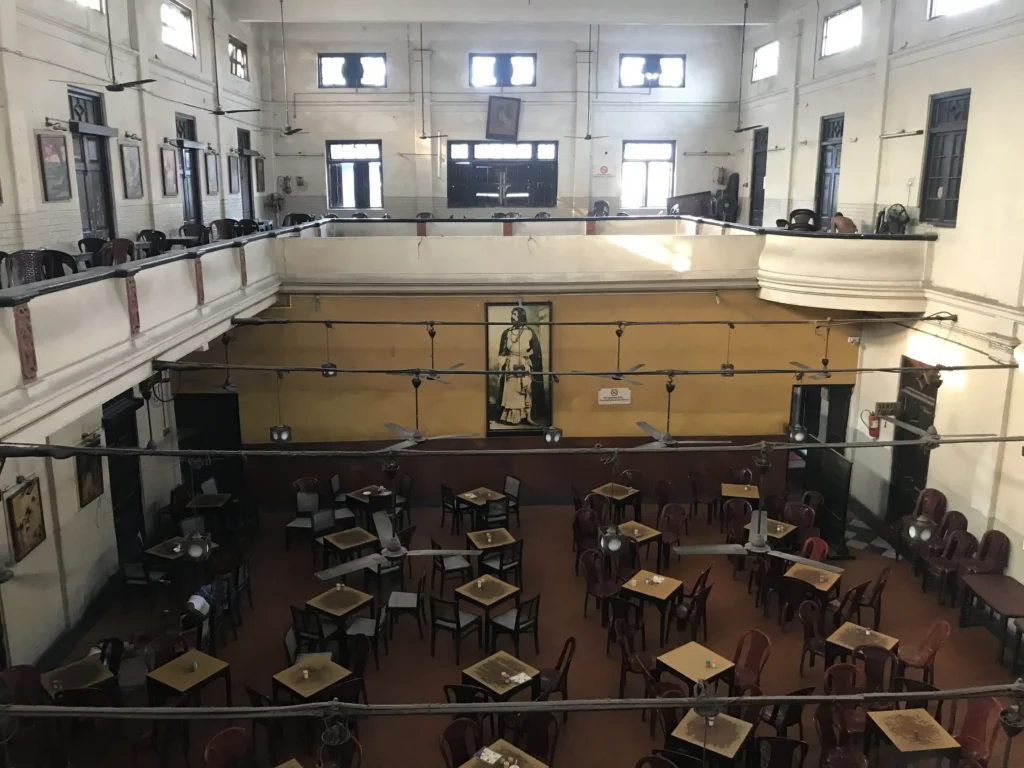
The building that would become Kolkata’s most famous café did not start as a café at all. Albert Hall, on Bankim Chatterjee Street just off College Street, was built in April 1876 as the private residence of Ramkamal Sen Treasurer of the Bank of Bengal and Secretary of the Asiatic Society of Calcutta. It was a grand building for a grand man, and it occupied a prime position opposite Presidency College, then one of the most prestigious educational institutions in British India.
After Ramkamal Sen’s time, the building passed through various uses until 1942, when the Coffee Board of India decided to open a coffee joint at the location. The Coffee Board had a specific commercial rationale: tea dominated India’s beverage culture, and coffee needed to fight for its place. By placing a café directly across from one of Calcutta’s great colleges, they were targeting the most receptive possible audience students, intellectuals, and the educated middle class.
It worked. Almost immediately, the café became the gathering point for the college crowd: students from Presidency College, the University of Calcutta, Sanskrit College. Then the professors came. Then the writers and poets who lived and worked in the College Street area. By the time India gained independence in 1947 and the Central Government renamed the establishment “Coffee House,” it had already become something much more than a place to drink coffee.
The Intellectual Golden Age (1947–1970s)
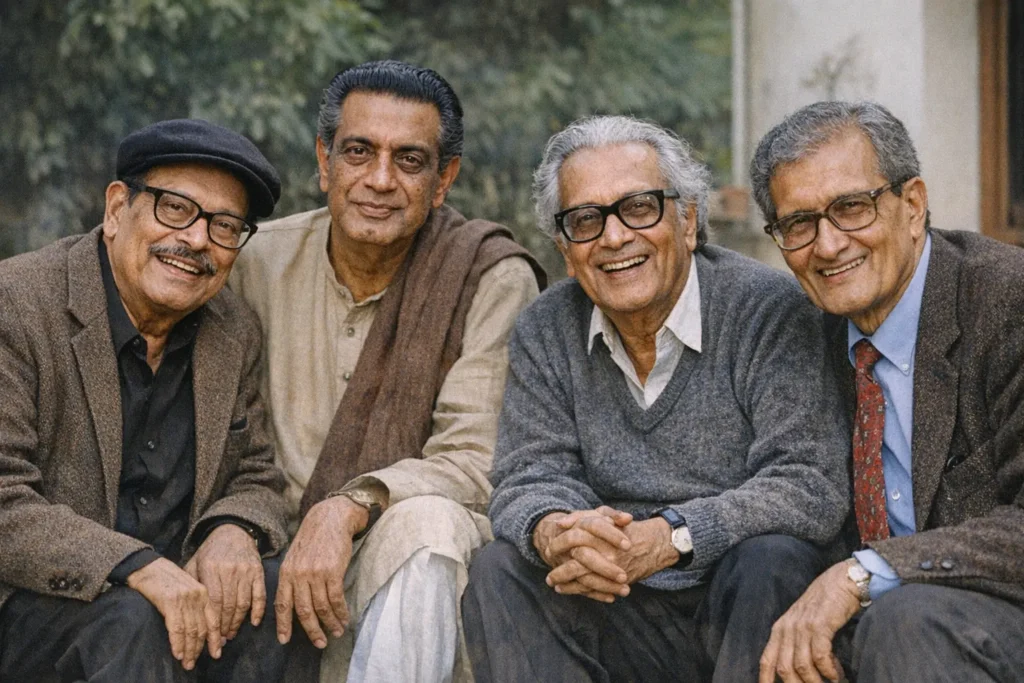
The decades after Independence were the Coffee House’s golden age. The list of figures who made this their regular adda reads like a who’s who of 20th-century Bengali and Indian cultural life: Satyajit Ray developed ideas for films here. Amartya Sen discussed economics. Mrinal Sen, Aparna Sen, Sunil Gangopadhyay, Shakti Chattopadhyay, and the entire generation of writers who defined modern Bengali literature called it home.
In the early 1960s, the Coffee House became the intellectual battleground of the Hungry Generation literary movement a radical avant-garde group of Bengali poets who challenged the cultural establishment so aggressively that two of their leaders were eventually arrested and prosecuted. Several literary magazines owe their origin to the inspiration of adda sessions at this coffee house. It was also the era in which Manna Dey recorded the song that made the Coffee House eternal: “Coffee House-er Sei Adda-ta Aaj Aar Nei” (“That Coffee House adda is long gone now”), with lyrics by Gauriprasanna Mazumdar. Paradoxically, the song’s lament that the old adda was disappearing only reinforced the Coffee House’s legendary status and guaranteed it would never actually disappear.
The Chain Era and the Rise of CCD (1990s–2010s)
The 1990s brought liberalisation, disposable income, and the first national coffee chains to Indian cities. Barista arrived, then Café Coffee Day and Kolkata embraced them as it has always embraced new things: with enthusiasm for the novelty and mild scepticism about whether anything could really replace the old ways. CCD introduced a generation of Kolkatans to terms like cappuccino and mocha and created the “café as third space” concept a place that was neither home nor office which was entirely new in a city where people had traditionally done their socialising on the street or in restaurants.
The Third Wave Arrives (2015–Present)
The shift happened gradually and then all at once. Roastery Coffee House opened in Gariahat in 2017, introducing Kolkatans to single-origin beans, in-house roasting, and brew methods like siphon coffee and cold brew. Blue Tokai opened multiple outlets across the city. Colab Coffee arrived in Jodhpur Park. Craft Coffee Experience Centre brought precision brewing to Ballygaunge. And in late 2025, Yours Truly Coffee Roaster opened in Elgin the most ambitious specialty coffee project Kolkata has seen yet, combining a roastery, a café, a bakery, and a dedicated Coffee Classroom inside a restored 60-year-old heritage bungalow spanning 15,000 square feet.
By 2026, Kolkata had a genuine third wave specialty coffee scene smaller than Bengaluru’s but authentic, growing fast, and distinctly Kolkata in character. The new cafés absorbed the city’s existing coffee culture the long-sit tradition, the bookshelf in the corner, the preference for conversation over Instagram and combined it with the craft coffee movement’s emphasis on bean quality, brewing technique, and transparency of sourcing.
The Three Eras of Kolkata’s Coffee Culture
To understand coffee culture in Kolkata today, it helps to think of it in three distinct eras that still coexist in the city. Unlike most cities where new waves simply replace the old, in Kolkata all three eras are simultaneously alive and flourishing. You can drink at an establishment from each era on the same day, in the same city, at wildly different price points and with completely different social experiences.
| Era | Period | Character | Key Venues | Price for Coffee |
|---|---|---|---|---|
| Era 1: Legacy | 1942–present | Intellectual adda, heritage, no-frills | Indian Coffee House (College Street & New Town) | ₹20–₹40 |
| Era 2: Heritage Revival | 2010–present | Colonial buildings, nostalgia, community | Byloom Canteen, Bhawanipur House, Siuli (GPO Café) | ₹80–₹150 |
| Era 3: Third Wave | 2015–present | Single-origin, craft brewing, education, immersive experience | Yours Truly, Blue Tokai, Roastery Coffee House, Colab Coffee, Craft Coffee | ₹150–₹300 |
Era 1 — The Legacy Cafés: Where It All Began
Indian Coffee House, College Street — The Most Important Café in India
Location: Bankim Chatterjee Street, opposite Presidency University, College Street
Timings: Daily approximately 9AM–9PM
Price: Coffee from ₹20 | Food from ₹35 | Meal for two approximately ₹150
Payment: Cash only
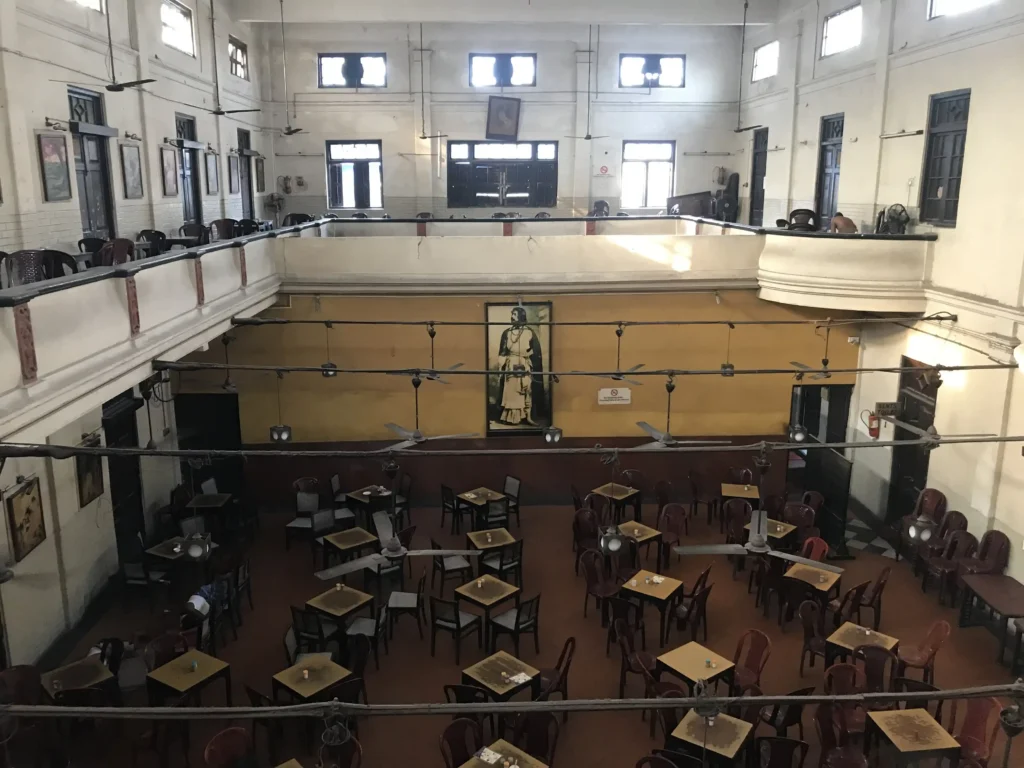
It would not be an exaggeration to say that the Indian Coffee House on College Street is the most culturally significant café in India. Not the best coffee the coffee is perfectly serviceable but not remarkable. Not the most beautiful space the ceilings are high, the furniture is plain, and the walls carry the faded weight of decades. But for cultural significance, historical resonance, and sheer accumulated meaning, nothing in the country compares.
The café operates today as it has for decades: under a worker’s cooperative, run by staff who wear the iconic white uniform with starched trousers and the distinctive fan-tailed turban that has become one of the visual signatures of Kolkata itself. The menu is unchanged in its essentials hot special coffee, cold coffee, chicken cutlet, fish kabiraji, mutton kati roll, toast, omelette. Prices are among the lowest of any café in the city. There are no WiFi passwords, no Instagram-worthy décor, no signature lattes.
What there is: the noise of two hundred simultaneous conversations. Tables occupied for two to three hours at a stretch. Students doing homework alongside retired professors doing crosswords alongside journalists arguing about politics alongside poets arguing about everything. The waiter who has been here for thirty years and remembers exactly what you usually order. This is what coffee culture in Kolkata is built on. Everything that came later is, in some sense, a descendant of this place.
Must order: Hot special coffee, chicken kabiraji cutlet, fish fry
Best time to visit: Late morning (10AM–12PM) for a quieter experience; late afternoon (4PM–6PM) for the full adda atmosphere
Insider tip: The upper gallery section offers slightly more space and a better view of the room. Carry exact change.
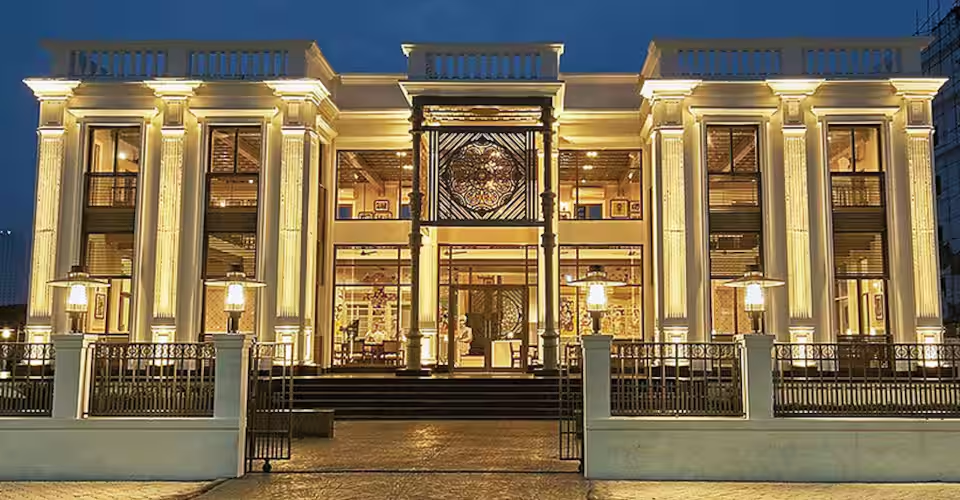
Coffee House, New Town The Heritage Experience, Rebuilt
Location: Opposite Amity University, Action Area II, New Town
Timings: Tuesday–Sunday, 9AM–9PM (Closed Mondays)
Price: Similar to College Street branch
Booking: Available through BookMyShow
For those who find the College Street branch too chaotic, this newer branch offers the same spirit in a deliberately heritage-designed space. The facade features cast iron latticework, Corinthian columns, and symmetrical architecture that evokes the British Raj. Inside, ceiling fans, hexagonal 3D-effect floor tiles, and a library corner recreate the old Kolkata atmosphere with more breathing room than the original. The walls carry illustrations and photographs celebrating the city’s culture, literature, cinema, and food — a thoughtful introduction to the Coffee House world for first-time visitors.
Era 2 — The Heritage Café Revival
Over the past decade, a distinctive new category of café has emerged in Kolkata that is unlike anything in other Indian cities: cafés that have deliberately restored and occupied colonial-era and early-20th-century buildings, using the architecture itself as the primary draw. These are not nostalgic gimmicks — they are serious attempts to preserve old Kolkata’s built heritage by giving it a new economic purpose.
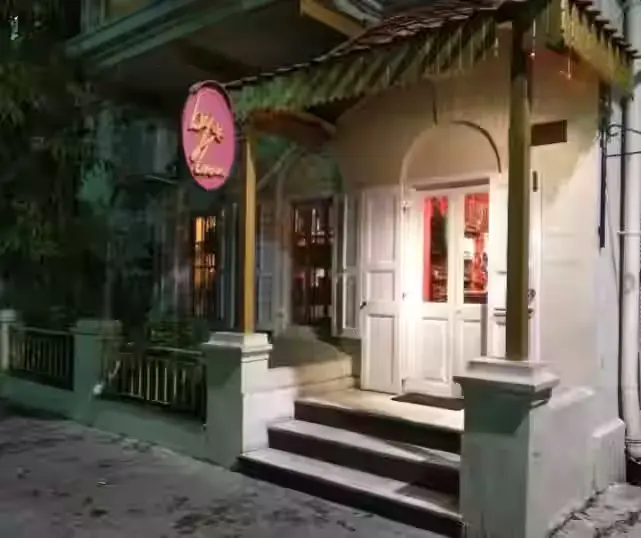
Byloom Canteen, Hindustan Park
Location: Beneath the Byloom boutique, Hindustan Park (restored early-20th-century South Kolkata residence)
Character: Khorkhori janala (louvered windows), vintage floors, old Kolkata atmosphere
Known for: Spontaneous literary meetups, relaxed adda, excellent mangsher chop, egg chops, Darjeeling tea
Coffee price range: ₹80–₹150
Set inside a lovingly restored residence in Hindustan Park, Byloom Canteen is what happens when adda culture meets thoughtful heritage preservation. The louvered windows, original floors, and unhurried service create an atmosphere that feels genuinely continuous with old Kolkata without feeling like a museum. The bookshelf is real, the conversations are real, and the food is excellent.
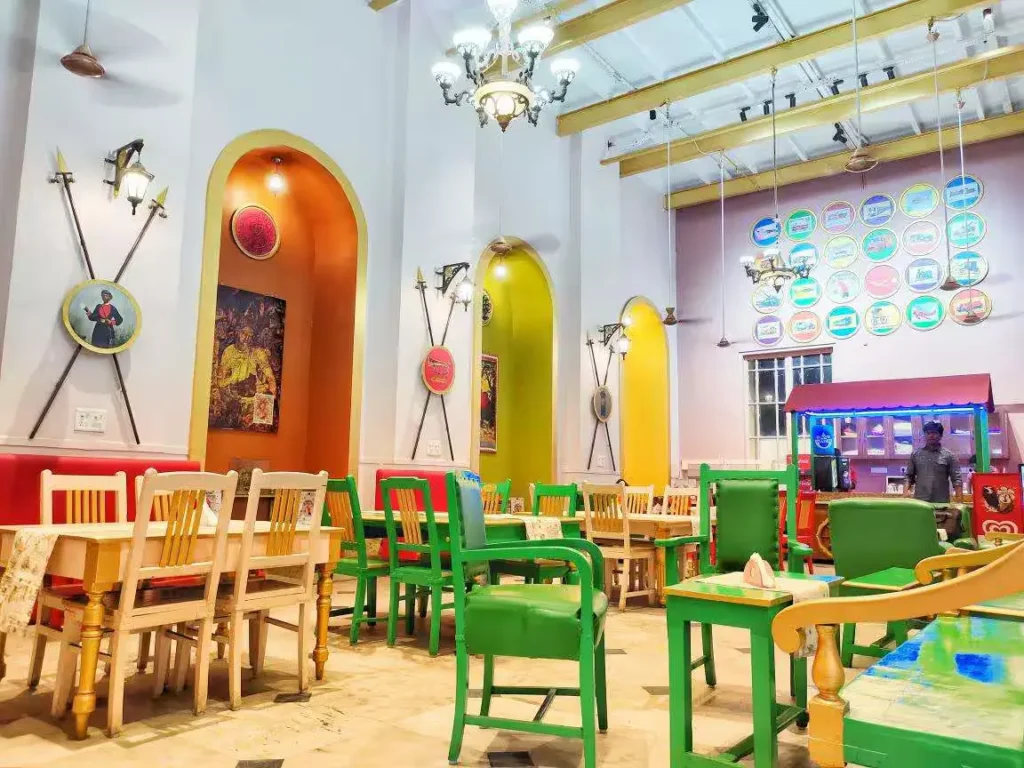
Siuli — The Parcel Café, GPO Building
Location: Inside Kolkata’s General Post Office, BBD Bagh (the building was constructed between 1864 and 1868)
Character: India’s first post office café; heritage meets whimsy; postal memorabilia throughout
Known for: The surreal experience of drinking coffee inside a 160-year-old functioning colonial post office; you can also send parcels on-site
Coffee price range: ₹80–₹150
Siuli is one of the most unique café concepts in India. The GPO building — an imposing Italianate structure that sits at the heart of colonial Calcutta in BBD Bagh — now contains a café that has woven postal memorabilia and period details into the building’s existing grandeur. The experience of sitting with a coffee inside a 160-year-old post office is one that you will not find anywhere else.
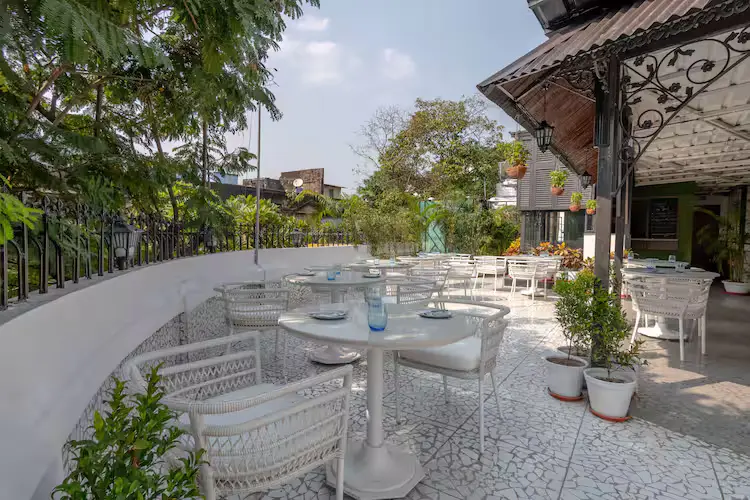
The Bhawanipur House
Location: Priyanath Mullick Road, Bhawanipur (early 20th-century colonial mansion)
Character: Open courtyards, wood-fired pizzas, artisanal baked goods, regular pop-up cultural events
Coffee price range: ₹100–₹180
A colonial mansion in Bhawanipur that has been carefully restored and repurposed as a heritage café with a serious food programme. The open courtyards are the highlight — a rare open-air space in south Kolkata that somehow feels both grand and intimate. The Bhawanipur House hosts pop-up cultural events, making it as much a community space as a café.
Era 3 — The Third Wave: Specialty Coffee Arrives in Kolkata
The third wave of coffee — the movement that treats coffee as an artisanal product worth understanding deeply, emphasising single-origin beans, transparent sourcing, and precise brewing methods — arrived in Kolkata about a decade behind Bengaluru. But when it arrived, it found fertile ground. A city that had been having serious conversations over coffee for 80 years turned out to be very ready for serious conversations about coffee.
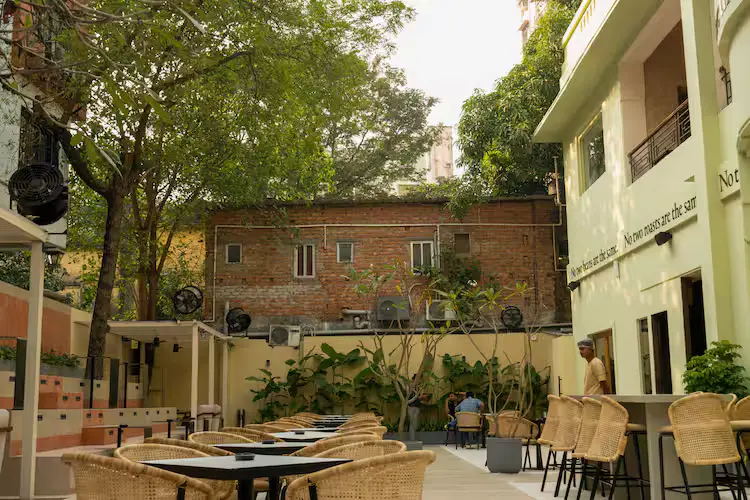
Yours Truly Coffee Roasters — Kolkata’s Most Ambitious Specialty Coffee Experience
Location: Elgin, Kolkata (restored 60-year-old heritage bungalow)
Area: 15,000 sq ft across roastery, café, bakery, and Coffee Classroom
Price range: Coffee ₹150–₹300
WiFi: Yes
Best for: Coffee education, immersive farm-to-cup experience, special visits, serious coffee enthusiasts, corporate team experiences
When Yours Truly Coffee Roasters opened in late 2025, it immediately set a new benchmark for specialty coffee experiences in Kolkata and arguably in India. The project was conceived and built by some of the city’s most respected names in food and beverage: Aditya Ladsaria and Aniruddh Poddar of Chai Break, Prateek Didwania of Snacking and Pico, and Piyush Kankaria and Vinay Sipani of The Yellow Straw. The combined expertise of this founding team shows in every detail of the space.
The setting is extraordinary: a fully restored 60-year-old bungalow in Elgin, spanning 15,000 square feet across multiple zones a roastery where all beans are roasted in-house with complete transparency, a café serving the full specialty menu, a bakery developed in collaboration with Lavonne Bakery Academy, and the anchor of the entire enterprise a dedicated Coffee Classroom.
The Coffee Classroom is what makes Yours Truly genuinely different from every other café in Kolkata. Led by industry experts including co-founder Prateek Didwania, it offers structured coffee education sessions where guests can learn about bean origins, processing methods, roasting profiles, and brewing techniques. The curriculum is built around eight distinct Indian estates Ratnagiri Estate, Attikan Estate, Thogarihunkal Estate, Baarbara Estate, Hoysala Estate, and others each chosen for a distinct flavour profile, from bright fruit-forward light roasts to deep, complex medium roasts. The idea is that every visit teaches you something new about what is in your cup.
The coffee programme itself is built on the principle that guests choose their bean first, then their brew method. Handcrafted options include espresso, pour-over, AeroPress, siphon, and moka pot and the baristas are trained to guide you through the choice rather than simply take your order. The cappuccino is made with 54g of Bold Heart beans, producing a full-bodied cup with rich earthiness and cocoa warmth. The latte is smooth and mellow, crafted for everyday sipping without losing the integrity of the bean.
The bakery is equally serious: artisanal sourdoughs, pastries, and desserts crafted specifically to pair with the coffee menu, with an emphasis on mindful coffee-and-food pairings that enhance rather than compete with each brew.
Yours Truly is not a café you visit for a quick coffee on the way somewhere else. It is a destination a place you plan a morning or afternoon around, a place that rewards curiosity and patience in equal measure. In a city that has always taken conversation seriously, it is the first place to take the coffee in that conversation equally seriously.
Must try: Single-origin pour-over (ask the barista to guide your bean selection), cappuccino with Bold Heart beans, the paired bakery offering of the day
Insider tip: Book into a Coffee Classroom session in advance these fill up and offer the deepest experience the café has to offer. Ideal for a group visit or a solo deep-dive into Indian specialty coffee.
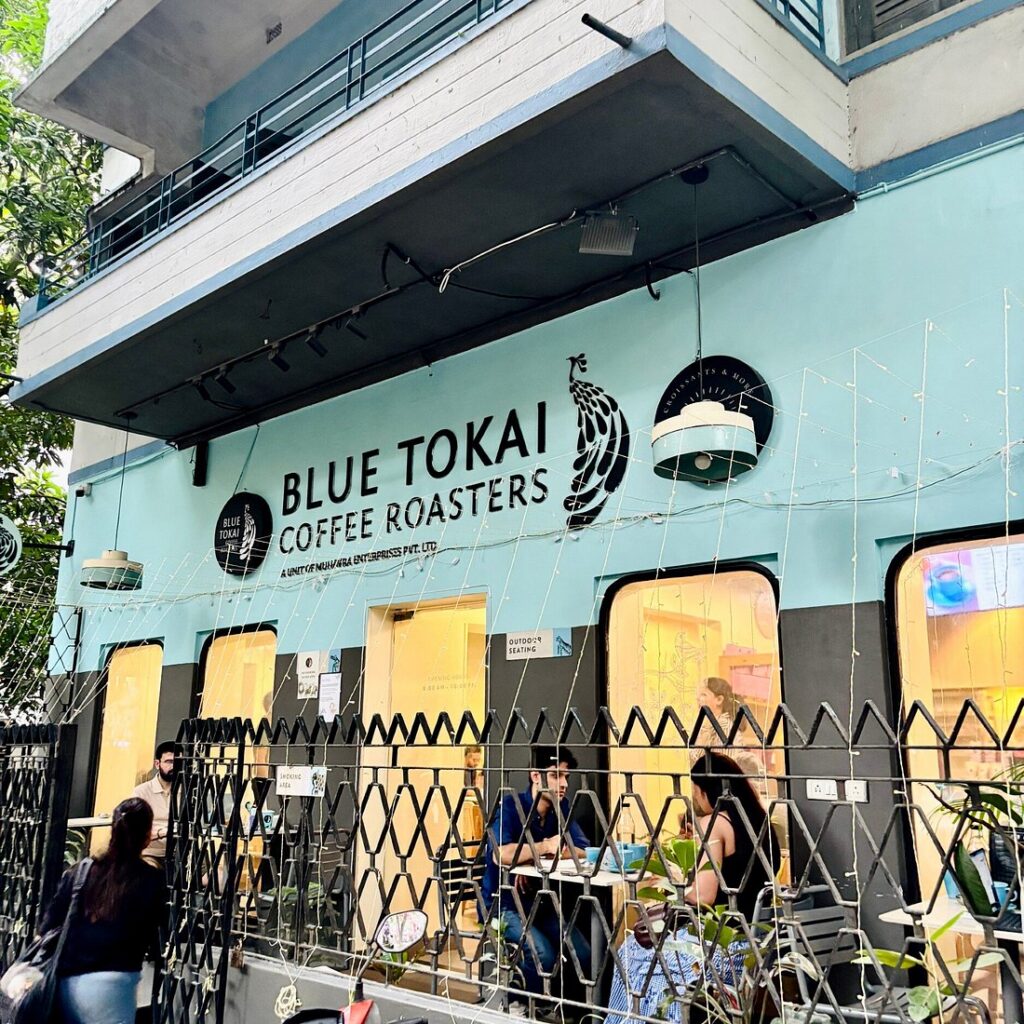
Blue Tokai Coffee Roasters — The Standard-Setter
Kolkata locations: Park Street (31 Chowringhee Road, opposite The Park Hotel) | Ballygunge (11 Palit Street, Jodhpur Park) | Southern Avenue | Salt Lake Sector V |New Alipore | Bidhannagar
Price range: Coffee ₹150–₹300 | Food ₹150–₹400
WiFi: Yes, at all locations
Best for: Consistent quality specialty coffee, work sessions, solo visits
Blue Tokai is the café that changed how a generation of Kolkatans thinks about coffee. The brand sources 100% Arabica beans directly from Indian farms in Chikmagalur, Coorg, Araku Valley, and Wayanad — single-estate, traceable, roasted twice a week to maintain freshness. The Park Street outlet, co-located with a Bahrisons Booksellers bookshop on the first floor, is one of the best combined café and bookshop experiences in the city: the combination of books, good coffee, strong WiFi, and a relatively quiet atmosphere makes it ideal for a sustained morning or afternoon.
The coffee is clean, precise, and consistent. The flat white and Vietnamese iced coffee are both excellent entry points. If you want to understand what single-origin Indian coffee tastes like the floral notes of an Araku bean, the chocolate undertones of a Chikmagalur roast Blue Tokai is where you start.
Must try: Vietnamese cold coffee, flat white, pour-over of the seasonal single-origin offering
Best location: Park Street (for the bookshop ambience) or Ballygunge / Jodhpur Park (for the rooftop and outdoor seating)
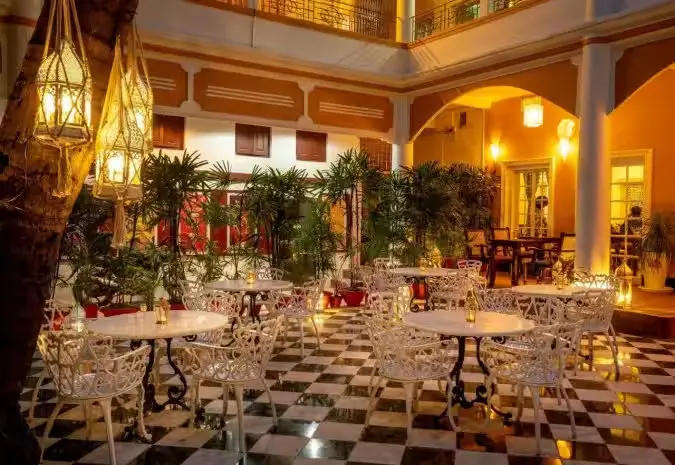
Roastery Coffee House, Gariahat — Kolkata’s Specialty Coffee Pioneer
Location: 70B, Inside Calcutta South India Club, Hindustan Park, Gariahat
Timings: Daily from 8AM
Price range: Coffee from ₹100 | Food ₹200–₹500 | Average for two ₹1,300
WiFi: Yes
Best for: Outdoor garden seating, specialty brewing, weekend brunch
Founded in 2017 and located inside the historic Calcutta South India Club itself founded in 1926, with Dr C.V. Raman as its first president Roastery Coffee House was one of the first cafés in Kolkata to place specialty coffee at the centre of its identity. The garden courtyard setting, with both indoor and outdoor seating inside one of south Kolkata’s most storied private clubs, is extraordinary.
The coffee is roasted in-house from single-origin Indian estate beans. The Cranberry Coffee a cold brew with a distinctive tart-sweet note has become a cult item and a Roastery signature that people travel specifically to try. The siphon coffee, prepared tableside, is worth ordering for the theatre alone. The food programme is serious and the weekend brunch draws long queues. Live folk music on weekends adds a cultural dimension that fits perfectly with the garden setting.
Must try: Cranberry Coffee, siphon coffee, cold brew
Best time to visit: Weekend mornings for brunch; weekday evenings for a quieter garden session
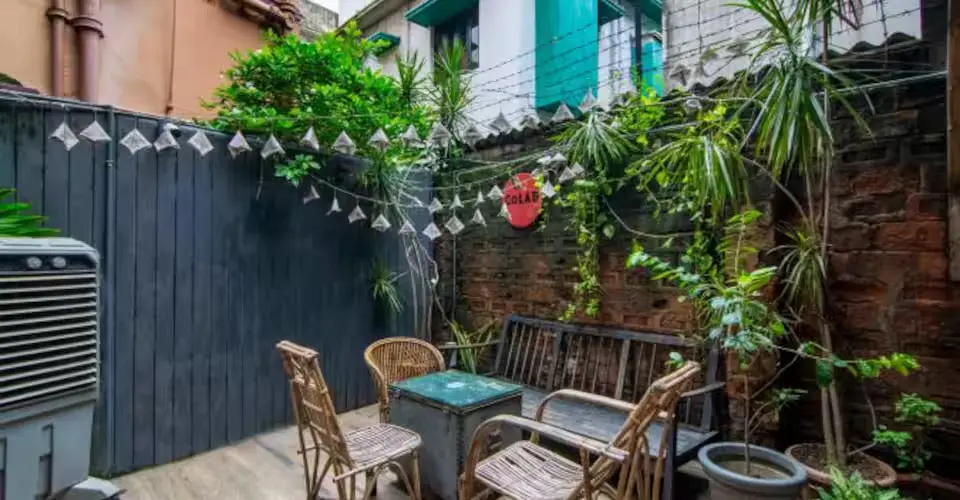
Colab Coffee, Jodhpur Park — The Artisanal Community Café
Location: 164, 9/1, Prince Anwar Shah Road, Jodhpur Gardens, Lake Gardens
Timings: 10AM–10PM daily
Price range: Coffee ₹100–₹250 | Average for two ₹850
WiFi: Yes
Best for: Chemex and pour-over coffee, community atmosphere, solo work, couples
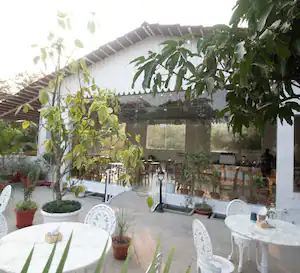
Colab Coffee is the café that the specialty coffee community in Kolkata tends to recommend most enthusiastically. The 1,400-square-foot space has both indoor and outdoor seating, with the outdoor section built around a tree strung with cane lamps that has become one of the most recognisable café visuals in the city. The Chemex coffee at Colab is widely considered one of the best brews in Kolkata carefully extracted, balanced, and prepared by baristas who clearly know what they are doing. The cappuccino is equally reliable.
Beyond coffee, the food is better than the setting suggests: the pea and broccoli hummus on freshly baked rosemary toast is excellent, and the stuffed buns and Polo Pesto Pizza have their own following.
Must try: Chemex coffee, cappuccino, pea and broccoli hummus on rosemary toast, stuffed buns
Nearest metro: Rabindra Sarobar (approximately 0.9km)
Craft Coffee Experience Centre, Park Street — For the Serious Coffee Drinker
Location: Ballygaunge
Price range: Coffee ₹150–₹300
Best for: Coffee flights, precision brewing, coffee education, the tech and finance weekday crowd
With in-house roasting and curated coffee flights tasting sets that allow you to compare brewing methods or bean origins side by side Craft Coffee is Kolkata’s most educational mainstream coffee experience. The baristas are knowledgeable and willing to explain their processes, and the coffee is consistently excellent. Worth visiting if you want to understand what the third wave is actually about before or after a session at Yours Truly.
Other Third Wave Cafés Worth Visiting
- 8th Day Café & Bakery — hand-poured brews, handwritten community notes, artisanal bagels, minimalist design. Channels the spirit of classic adda in a modern setting. Popular with creatives and digital nomads.
- La Macario — known for the largest cups of cold coffee in the city, eco-friendly interiors with potted plants and creepers, and a coffee loyalty programme (free drink after 7 purchases). Very popular with college students.
- Evabrew — small bistro, two floors, excellent mocha and Spanish coffee. One of those places you stumble upon and immediately want to return to.
- Lighthouse Café, Lake Gardens — bright, well-lit ambience ideal for working; delivers via Swiggy and Zomato, including signature Chemex and Kyoto Cold Drip Coffee.
Neighbourhood-by-Neighbourhood Coffee Guide
Kolkata’s café landscape is spread across distinct neighbourhoods, each with its own character. Here is where to go depending on where you are in the city.
College Street / North Kolkata
This is the spiritual home of Kolkata’s coffee culture. The Indian Coffee House is the unmissable destination, but the neighbourhood itself with its dense concentration of bookshops, publishers, and educational institutions creates an atmosphere that no other part of the city replicates. Come here for history, for adda, and for the experience of drinking coffee in a room that has hosted more significant conversations per square metre than almost anywhere in the country. Coffee prices: ₹20–₹80.
Elgin / Minto Park / Theatre Road
This leafy central neighbourhood is now home to Kolkata’s most ambitious coffee destination. Yours Truly Coffee Roasters in Elgin has transformed this area into a must-visit for specialty coffee enthusiasts. The 15,000 sq ft heritage bungalow space, with its roastery, café, bakery, and Coffee Classroom, gives this neighbourhood a coffee credential that is genuinely unique in the city. Coffee prices: ₹150–₹300.
Park Street / Central Kolkata
Park Street is where the old and new coexist most visibly. Blue Tokai’s flagship Kolkata outlet sits opposite The Park Hotel alongside a Bahrisons bookshop one of the best combined café and bookshop experiences in India. Craft Coffee Experience Centre brings precision brewing to the strip. The area also has numerous legacy coffee shops and fast-casual cafés for those who want something between the extremes. Coffee prices: ₹80–₹300.
Gariahat / Hindustan Park / Ballygunge
The heart of south Kolkata’s café culture and the neighbourhood with the highest concentration of quality coffee destinations. Roastery Coffee House in the South India Club, Byloom Canteen nearby, Blue Tokai in Jodhpur Park and Ballygunge, and numerous independent cafés make this the best single area for a dedicated coffee crawl. Coffee prices: ₹100–₹300.
Jodhpur Park / Lake Gardens / Southern Avenue
Colab Coffee anchors this neighbourhood’s café scene, with Blue Tokai’s Southern Avenue and Jodhpur Park outlets nearby. A quieter, more residential feel than Gariahat good for long sit-down visits without the weekend crowds. Coffee prices: ₹100–₹250.
BBD Bagh / Strand Road
Siuli, the post office café inside the GPO, is the main coffee destination in this historic commercial district. Surrounding heritage buildings and the proximity to the Hooghly River make for an interesting afternoon combining coffee and heritage walking. Coffee prices: ₹80–₹150.
Salt Lake / Sector V
Blue Tokai has a well-reviewed outlet at Salt Lake Sector V, making it the go-to for the IT professional crowd and students from the area’s many engineering institutions. Specifically designed for work sessions good WiFi, sufficient power points, and a calm atmosphere. Coffee prices: ₹150–₹250.
Coffee Price Comparison: ₹20 to ₹300
One of the most striking aspects of Kolkata’s coffee culture is the extraordinary range of price points at which you can have a genuinely worthwhile experience. This table covers the full spectrum.
| Café | Type of Coffee | Price | What You Get | Best For |
|---|---|---|---|---|
| Indian Coffee House, College Street | Hot special coffee (filter) | ₹20 | Strong, hot, served by uniformed waiter in a 150-year-old room | Heritage experience, adda, students |
| Indian Coffee House, College Street | Cold coffee | ₹40 | Chilled, milky, no frills | Budget-conscious visitors |
| Byloom Canteen / Heritage cafés | Filter coffee, Darjeeling tea | ₹80–₹120 | Good quality in a beautiful restored colonial space | Atmosphere seekers, couples |
| La Macario | Classic cold coffee, French vanilla cold brew | ₹120–₹160 | Large servings, eco-friendly décor, loyalty card | College students, casual visitors |
| Roastery Coffee House | Cranberry Coffee, cold brew, siphon | ₹150–₹250 | In-house roasted single-origin, garden setting | Specialty coffee lovers, brunch |
| Colab Coffee | Chemex, cappuccino, pour-over | ₹150–₹250 | Artisanal brewing, community atmosphere | Solo workers, coffee enthusiasts |
| Blue Tokai | Vietnamese iced coffee, flat white, pour-over | ₹150–₹300 | Single-origin Indian beans, clean and consistent | Work sessions, consistent quality |
| Craft Coffee Experience Centre | Coffee flights, espresso, cold brew | ₹180–₹300 | Precision brewing, barista education | Serious coffee drinkers |
| Yours Truly Coffee Roasters | Single-origin pour-over, AeroPress, siphon, espresso, cappuccino | ₹150–₹300 | Choose your bean, choose your brew; Coffee Classroom; 8 Indian estates; heritage bungalow setting | Immersive coffee education, special visits, enthusiasts |
Work-From-Café Guide: Best Kolkata Cafés for Laptops
Kolkata has enthusiastically adopted the work-from-café culture — partly driven by the city’s large freelance creative community, its growing tech sector, and the general Bengali disposition toward working in the company of others rather than alone. Here is where to go when you need to get things done.
Best Overall: Blue Tokai, Park Street or Salt Lake Sector V
Strong WiFi at all locations. Adequate power points. The Park Street outlet has the bonus of a bookshop adjacent. The Sector V outlet is quieter on weekdays and specifically designed for the work-session crowd. Coffee quality is consistent and the menu is substantial enough to sustain a full-day session.
WiFi: Strong ✓ | Power points: Available ✓ | Noise level: Moderate | Table pressure: Low on weekdays
Best for Deep Focus: Colab Coffee, Jodhpur Park
The residential neighbourhood setting and the café’s generally calm atmosphere make it one of the best places in the city for sustained concentration. The coffee is excellent which helps, and the tables are well-spaced. Midday on weekdays is the sweet spot after the morning rush and before the late-afternoon crowd.
WiFi: Yes ✓ | Power points: Available ✓ | Noise level: Low to moderate | Table pressure: Low to moderate
Best for Creative Work: Roastery Coffee House, Gariahat
The garden setting is surprisingly productive weekday mornings before 11AM are ideal: quiet, pleasant, with good coffee available from 8AM. WiFi is reliable. Avoid weekend afternoons when the brunch crowd makes concentration difficult.
WiFi: Available ✓ | Power points: Limited | Noise level: Low (weekday mornings) / High (weekends) | Table pressure: Low on weekdays
Best for an Immersive Learning Session: Yours Truly Coffee Roasters, Elgin
If your work involves coffee, food, hospitality, or creative industries, a session at Yours Truly’s Coffee Classroom can be one of the most productive half-days you spend in Kolkata. The structured learning environment, the quality of the space, and the depth of coffee knowledge on offer make it ideal for those who want to combine a meaningful professional development experience with a beautiful working environment. Book a classroom session in advance and arrive early to explore the roastery.
WiFi: Yes ✓ | Power points: Available ✓ | Noise level: Low | Table pressure: Low
Best Heritage Work Setting: Siuli, GPO Building, BBD Bagh
For those who find that a beautiful, historically significant environment improves their work, Siuli inside the General Post Office is remarkable. The WiFi is available, the coffee is decent, and the surroundings — a 160-year-old postal building in full working operation — are unlike anything else in the city.
Honest Advice: Avoid the Indian Coffee House for Work
The Coffee House is many things, but a productive workspace is not one of them. The noise is considerable, there are no power points, the WiFi does not exist, and the whole purpose of the space is conversation, not concentration. Go there for adda. Work elsewhere.
Chai vs. Coffee: Kolkata’s Great Beverage Debate
No guide to coffee culture in Kolkata would be complete without addressing the elephant in the room: Kolkata is, historically and demographically, a chai city.
The neighbourhood tea stall the roadside chaiwala who has been serving strong, sweet, milk-boiled tea in small earthen cups called bhaar for decades is as fundamental to Kolkata’s social fabric as the Coffee House itself. In some ways more so: tea stalls operate on every street corner, at every hour, at prices that make Indian Coffee House look expensive. They are patronised by every class, every community, every age group.
So is Kolkata a tea city or a coffee city? The honest answer is: both, in different registers. Tea is the daily, habitual, everywhere drink the beverage of commutes and construction sites and morning newspapers and quick breaks between work. Coffee, historically, has been the beverage of a specific social occasion: the long sit, the serious conversation, the intellectual gathering.
The third wave cafés and especially Yours Truly, with its deliberate emphasis on education and the story behind each cup have added a new dimension to this dynamic. For the first time, Kolkata has coffee drinkers who care about bean origin, roast profile, and brewing method who drink coffee the way wine lovers drink wine. But the tea stall on the corner is not going anywhere, and nor should it. The two cultures coexist comfortably, as most things do in Kolkata with occasional arguments about which is better, which is more authentically Bengali, and which Manna Dey would have preferred. The arguments are the point. The coffee helps.
Frequently Asked Questions
What is the coffee culture in Kolkata?
Kolkata’s coffee culture is built around the concept of adda — the Bengali tradition of long, unstructured intellectual conversation over a shared cup. It traces back to the Indian Coffee House on College Street, founded in 1942 in a building dating to 1876, which became the gathering place for generations of writers, filmmakers, politicians, and students. Today, the city has three distinct coffee eras living simultaneously: the legacy Indian Coffee House culture, a heritage café revival using restored colonial buildings, and a growing third wave specialty coffee scene centred around venues like Yours Truly Coffee Roasters, Blue Tokai, Roastery Coffee House, and Colab Coffee.
What is the best café for coffee in Kolkata?
It depends on what you are looking for. For the most immersive and educational specialty coffee experience, Yours Truly Coffee Roasters in Elgin is the new benchmark — a 15,000 sq ft heritage bungalow with a roastery, café, bakery, and Coffee Classroom. For consistent quality across multiple locations, Blue Tokai leads the field. For the best Chemex and artisanal coffee in a community setting, Colab Coffee in Jodhpur Park is outstanding. For the best heritage garden café with in-house roasting, Roastery Coffee House in Gariahat is the top choice. For the best cultural experience, the Indian Coffee House on College Street is irreplaceable.
What is Yours Truly Coffee Roasters Kolkata?
Yours Truly Coffee Roasters is Kolkata’s most ambitious specialty coffee destination, opened in late 2025 in a restored 60-year-old heritage bungalow in Elgin. The 15,000 sq ft space combines an in-house roastery sourcing beans from eight Indian estates, a specialty café offering pour-over, espresso, AeroPress, siphon, and moka pot brewing, an artisanal bakery developed in collaboration with Lavonne Bakery Academy, and a dedicated Coffee Classroom for structured coffee education. It was founded by Aditya Ladsaria, Aniruddh Poddar, Prateek Didwania, Piyush Kankaria, and Vinay Sipani — respected figures from Kolkata’s food and beverage industry.
What is the Indian Coffee House Kolkata famous for?
The Indian Coffee House on College Street is famous as one of the most historically significant cafés in India. Founded in 1942 in a building dating to 1876, it was the regular adda of Satyajit Ray, Amartya Sen, Mrinal Sen, Aparna Sen, and Sunil Gangopadhyay. It was immortalised in Manna Dey’s famous Bengali song “Coffee House-er Sei Adda-ta Aaj Aar Nei.” It continues to operate as a worker’s cooperative, serving coffee from ₹20, and remains one of the cheapest and most culturally rich café experiences in the country.
What is adda and how does it relate to coffee?
Adda is the Bengali tradition of long, unstructured, intellectually engaged conversation — a gathering where the goal is the quality of the exchange itself, with no fixed topic, agenda, or end time. Coffee, because it requires a café and a sit-down, created the physical conditions for adda. The Indian Coffee House made it possible to sit for two or three hours over a single cup without being asked to leave. This combination — affordable coffee, welcoming space, and the cultural permission to stay — made coffee the official beverage of adda, and adda the defining activity of Kolkata’s coffee culture.
Where can I find specialty coffee in Kolkata?
The best specialty coffee options in Kolkata are: Yours Truly Coffee Roasters (Elgin — most immersive, with Coffee Classroom and 8 Indian estate beans); Blue Tokai Coffee Roasters (multiple locations including Park Street, Ballygunge, Southern Avenue, Salt Lake Sector V, and Jodhpur Park); Roastery Coffee House (Gariahat/Hindustan Park — in-house roasting, garden setting); Colab Coffee (Jodhpur Park — Chemex and pour-over specialists); and Craft Coffee Experience Centre (Park Street — coffee flights and precision brewing).
What is the best neighbourhood for coffee in Kolkata?
For the deepest cultural coffee experience, College Street in north Kolkata is essential. For the most immersive specialty coffee destination, Elgin is now unmissable — Yours Truly Coffee Roasters alone justifies the visit. For the widest range of quality options in a walkable area, Gariahat and Hindustan Park in south Kolkata is the best neighbourhood overall. For the most modern specialty café environment, Park Street offers Blue Tokai, Craft Coffee, and several other options.
Is Kolkata better known for tea or coffee?
Kolkata is historically a tea city — the neighbourhood chaiwala and the culture of bhaanr (earthen cup) tea at street stalls is deeply embedded in daily Kolkata life. However, the city also has one of India’s oldest and most culturally significant coffee traditions, centred on the Indian Coffee House and the adda culture it generated. Today both exist alongside each other: tea as the everyday beverage of the street and the home, coffee as the beverage of the café and the long intellectual conversation. The third wave specialty coffee movement — led by venues like Yours Truly, Blue Tokai, and Roastery — has added a new dimension of coffee connoisseurship that is growing rapidly.
Can I find work-friendly cafés with WiFi in Kolkata?
Yes. Blue Tokai at Park Street and Salt Lake Sector V are the most reliable options for work sessions — strong WiFi, adequate seating, good coffee, and low table-pressure on weekdays. Colab Coffee in Jodhpur Park and Roastery Coffee House on weekday mornings are also excellent. Yours Truly in Elgin offers a particularly good environment for those in creative or food-related industries — the Coffee Classroom setting is ideal for focused, inspiring work sessions. The Indian Coffee House, while culturally essential, is not suitable for work — it has no WiFi, no power points, and considerable ambient noise.
Last updated: April 2026. Prices and timings are subject to change — always verify with individual cafés before visiting. The specialty coffee scene in Kolkata is evolving rapidly; new venues open regularly and the recommendations above reflect the best options as of early 2026.